BANDIT EDIT's Laura Relovsky on Navigating Constant Change
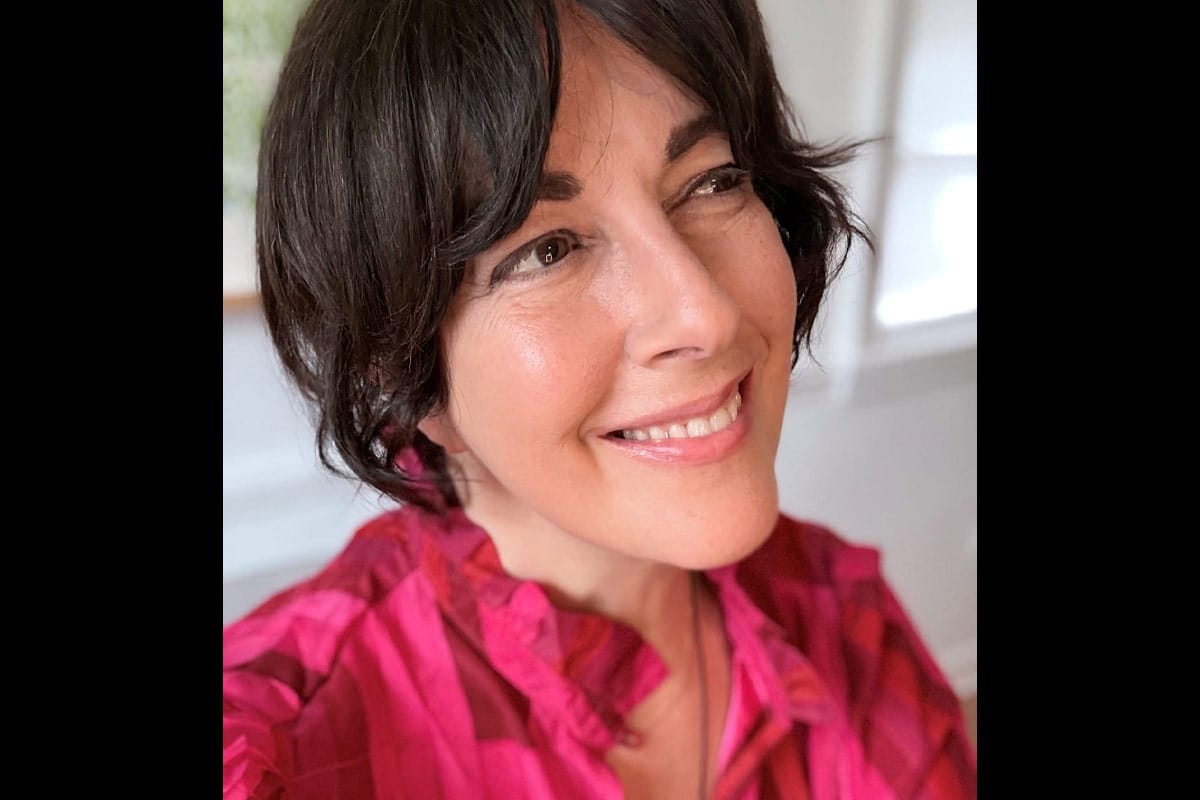
If BANDIT’s Laura Relovsky had one of those theme songs that baseball players get when they step to the plate, it might be David Bowie’s ‘Changes.’ That’s because, during the course of her career, she’s seen plenty. From the earliest days of editing film on flatbeds and being guided by some of the post production industry’s trailblazing creative and producing talents, this company EP has gone on to helm a boutique editorial house based in NY with national and global reach—and partner offerings in Music, Audio Post and VFX.
As Laura likes to say, change is inevitable. What makes the difference is how you navigate around it, through it, or with it. And that’s what she’s been doing, as the post production world goes through seismic changes that touch on everything from staffing to business practices to creative collabs to client relationships.
At BANDIT, one thing Laura does is tap into a wider community; the more, it seems, the merrier. She’s been mentored by the best, and is playing it forward these days as she sees people come up through the ranks, as she did, and blossom into their own as editors, producers, EPs, owners, you name it. Meanwhile, she’s using her platform at BANDIT to do everything from helping host events such as a recent Women in Post Production panel discussion and creative superstar Gerry Graff’s Astroland Advertising Festival to delivering talked-about work for brands like Walmart, Instagram, Dove, Samsung, e.l.f. Cosmetics, Huggies, Verizon, Etsy, the NBA, Meta, and more.
The Howler sat down with Laura recently to ask about her career path, her view on industry shifts and where she sees the business headed. Here’s what she told us.
Who were the biggest influences on your career as you were coming up through the ranks? And what’s your take on the role of mentorship as a company leader?
Laura Relovsky: When I got into the industry I was very young and knew very little, but was hungry to learn. My earliest mentors/influences were people like Hank Corwin, who I actually credit with helping me get my foot in the door in post, ironically enough. He helped me get a job with Vito DeSario, who is also an iconic editor/talent. My first job was as Vito’s business manager, and even though it didn't last more than a year or two, the amount I learned from him and his team was both immeasurable and invaluable.
I also grew up in the industry watching literal powerhouses just killing it with their companies: Lee Weiss was running Red Car (and later it was Roe Bressan), people like the incredible John Palestrini, Barbara Dee, Jane Stuart, Dennis Hayes, Billy Williams, etc. When I landed at Mad River Post after starting and running Progressive Image Group for several years, Michael Elliot and Krystn Wagenberg were huge influences, and I continued to learn a great deal from them. I still consider Michael one of the preeminent talents in this industry.
I’m also inspired and learn from the entire team at my current company every day. I'm lucky. Mentorship and growth, whether it is assistants becoming editors, admin staff moving into producing or whatever, has been a constant. I cannot tell you the number of post people who started as runners or in client services who are now incredibly successful editors, producers, EPs, or even business owners. It speaks a lot to our industry and how it has historically been a haven for creativity, growth, and opportunity. I’m proud of that. I'm proud to have helped grow talent and staff over the years. It’s one of the things I love the best about it, to be honest.
Today’s productions often require collaboration across multiple specialties and disciplines. How does Bandit approach building the right team around a project, and what benefits does that bring to clients?
Laura: Every project is different, so our approach is to build the team that best serves the creative. One of our strengths is the ability to bring together exceptional talent across editorial, music, sound, design, VFX, and finishing, whether that's through our affiliated creative teams or our long-standing relationships with outstanding independent partners. When the right project calls for an integrated team, there's a level of workflow, communication, creative shorthand, and trust that comes from people who collaborate regularly. That translates into a more seamless process, faster problem-solving, and an efficient production experience for our clients, without ever sacrificing creativity.
At the same time, we're never limited to one approach. We have deep relationships throughout the post production community and enjoy assembling the right combination of collaborators for each project. Our goal is always the same: build the strongest creative team for the work, regardless of where the talent comes from.
Video player powered by Simian
How much work are you doing that’s direct to client? In this age of increased competition from agency in-house departments, do you see this as a valuable source of new work and new relationships?
Laura: There’s definitely more opportunity to work directly with clients, as we’re seeing brands starting to shift their advertising creative needs internally rather than outsourcing to independent agencies. They’ll have internal agencies, or subcontracted creative directors. A lot more is falling on companies’ and brands' marketing directors. BANDIT has been doing some work directly to clients, but since we’re in post, it generally comes through a production company relationship initially. That said, we're definitely devoting more time and resources to pursuing more direct-to-client work, since we are seeing this trend. It’s just one more area that we can add to our sales efforts that I do believe will keep growing.
We also see brands shifting more to doing social campaigns using content creators/influencers, and they may choose to do this without the help of an agency, per se. This was a huge focus in Cannes this year, and it’s an opportunity to offer up resources and services to help with these types of campaigns. They need folks who are nimble and can do it all.
The way post houses are structured in terms of their talent offerings is changing, with more and more talent available on a freelance basis. How do you strike a balance between working with staff editors and artists versus working with independents? What are the benefits of approaching this with an open mind?
Laura: Well, these days, and in this industry specifically, I think we all need to have an open mind. Change is inevitable; it’s always been a constant. So it’s just about figuring out how to navigate it all, month to month, year to year. Historically, we've always had staff roster editors (and that was the case for the vast majority of post houses); however, we also find ourselves with some great relationships with editors (who are on our roster) that might not look like it did 10 years ago. I think we’re striking a good balance right now. Some editors like a permanent home, and they appreciate the security, where there is a mutual investment in time, energy, and commitment. Others love having a solid relationship with a post house, but also have aspirations in film, long form, TV series, or other global markets.
To me, it’s about finding the right fit and finding great creative people to work with. Having mutual respect, similar vibes, work ethic, open communication, and talent is something we’re always open to. I know some houses have all freelance editors. Some have a hybrid. I think it is all on the table right now, and that’s okay. It has to be, frankly.
Agency production is changing, with holding companies moving producers out of individual agencies and pooling them in standalone production units. Has that impacted the way you work with them?
Laura: Well, this goes back to the fact that change and evolution are inevitable, and while I could just complain about how things don't look or work as they did even a year ago, but that’s just a waste of time and energy. Yes, I feel there’s great benefit when agencies have teams (producers and creatives) who’ve worked together a good amount. There’s a comfort level that develops, a shorthand, and more understanding in how all the parties work, which definitely helps the creative process.
I would argue that a little of that might be lost in the scenario you’re asking about, but again: how do we just navigate it in the best way possible? The main thing we can do is continue to be the best partners on all projects, no matter their internal infrastructure. All we can control is making sure we are a solid, creative, consistent, and trusted collaborator amidst all the shifting and swirling.
We have relationships with many amazing agency producers in the industry; we value their relationships a great deal. That won’t change. Same goes with the many talented creatives we’ve worked with. Keeping those relationships strong transcends any of the other stuff. So it’s really just about how it looks from one day to the next, and rolling with it. Agency peers are all dealing with the changes too – they’re not impervious. So we hope to always be a safe, fun, and creative haven.
Let’s talk AI! How are your companies using this technology? Where has it been a big plus? What are clients asking for? How much time do you spend educating them?
Laura: AI is here—and whether it’s here to stay, or to what significant degree it will really affect this industry, remains to be seen. We’re currently using it as a tool, like any other tool in our creative toolbox. All of our editors and assistants and VFX artists have used it in some capacity – whether helping with the loading and organizing of massive projects, using AI VO for scratch records, or perhaps utilizing it to help with complex and time-consuming tracking or rotoscoping. We’ve used it to help enhance some scenes or to create flourishes that might not be found in stock footage, or might be too time-consuming to accomplish in CG. We try to stay abreast of the various platforms/tools out there, and how they can be utilized in a way to enhance, rather than replace, what we are doing.
There’s also a long way to go with regard to how it is licensed, who has the IP, etc. It also has limitations with regard to revisions and adjustments. It’s good to stay engaged, stay curious, and keep up with the trends, so you can be a resource for an agency that might have questions.
Budgets are on everyone’s mind, along with the impossible scope creep that accompanies so many jobs. How are your companies addressing the requests for more and more deliverables that seem to be the norm these days, not the exception.
Laura: It’s obviously no secret that budgets have shrunk and agencies/ brands are continuing to look for more efficiencies, with even more deliverables. The complexity and scope of the various files and deliverables we need to produce is incredible. The matrices we are sometimes supplied with are just mind-boggling.
I think the most important thing we can do when approached with a challenging scope or budget is to have open and transparent conversations. If it’s something we cannot take on, I don’t beat around the bush. However, if there’s a way to find a solution, we always will. We have our senior editors, but we also have emerging talent who are ready, willing, and more than able to tackle projects that might be more challenging. It’s a great way to introduce them to more clients, get them experience, and keep costs down.
We try to be realistic in any approach, and we always try to explain and educate without being patronizing. Sometimes agency clients (especially if newer in the industry) may not understand everything that goes into delivering on a giant matrix. I think being earnest and respectful when talking about the scope of the project goes a long way.
That being said, we are constantly walking a fine line—you need to make sure not to devalue your talent or services in any way, or set any precedents with lower-than-appropriate rates, etc. We need to be careful with that as a community. However, figuring out efficiencies, having more offerings, utilizing different rate cards and services for different types of campaigns is something that agencies are looking for. Gone is the one-size-fits-all type of campaign or project.