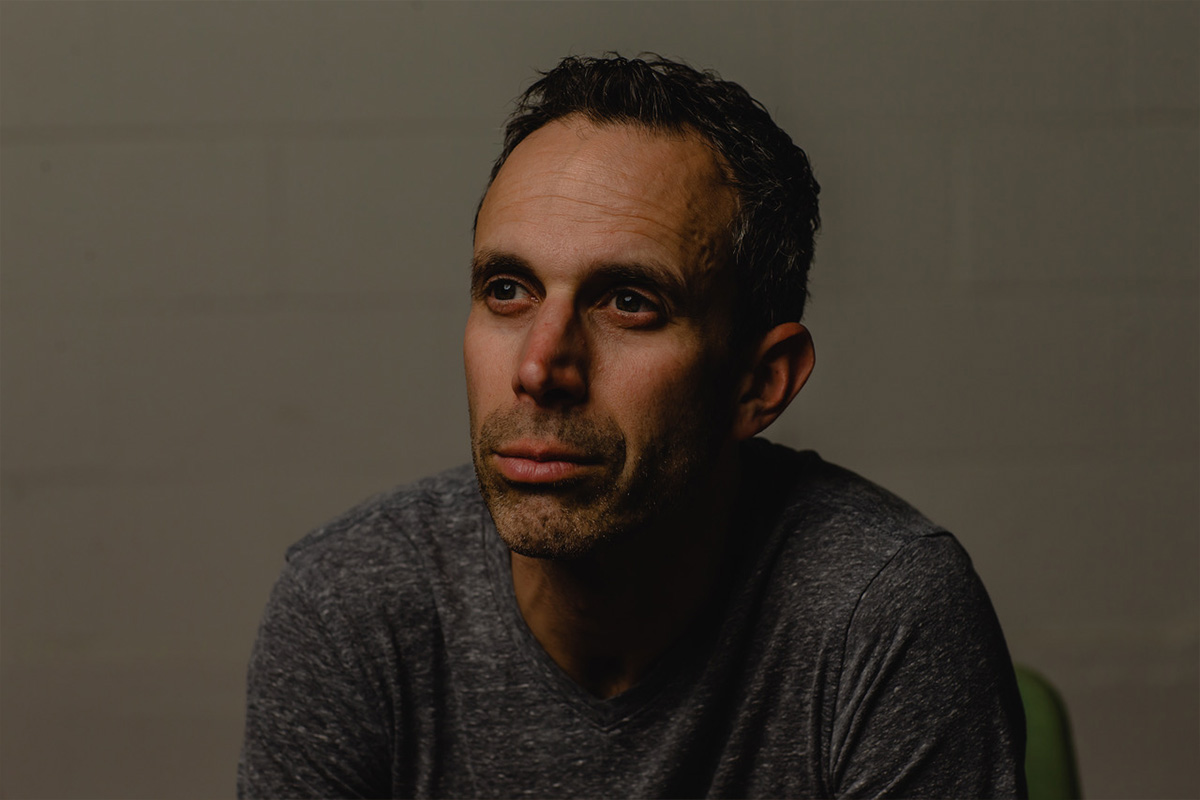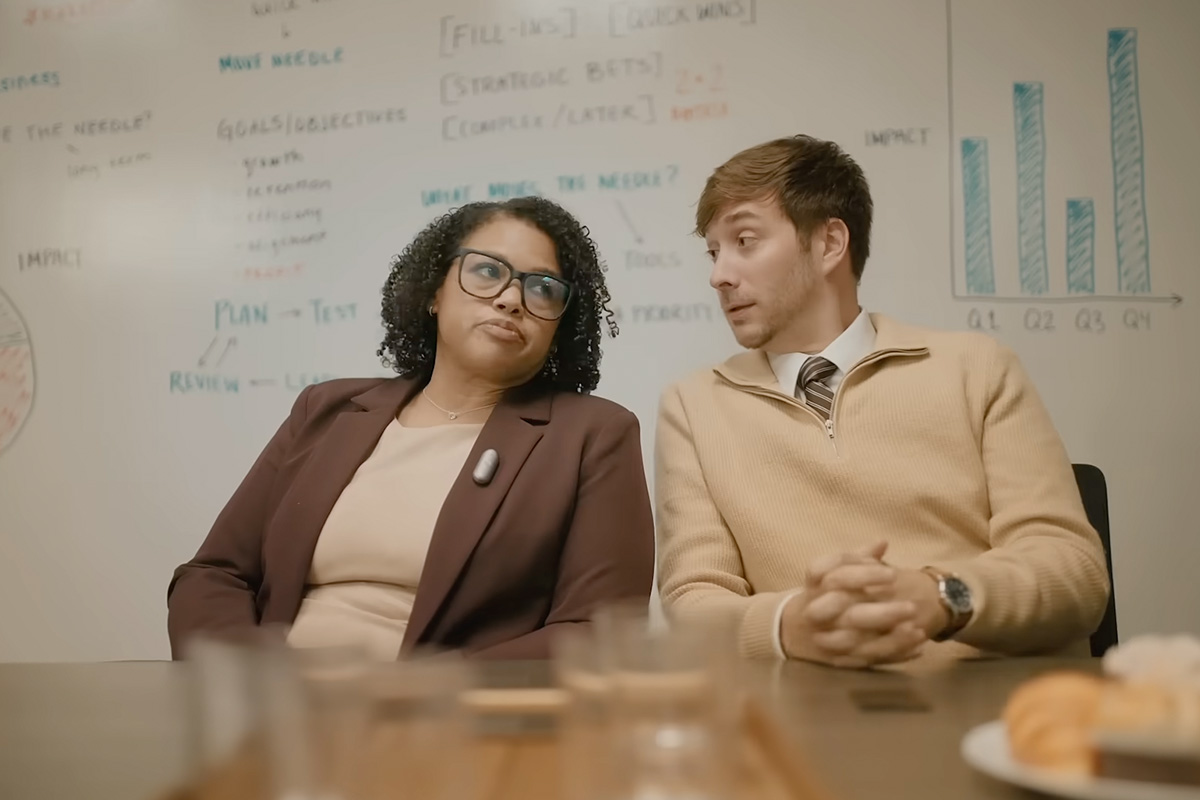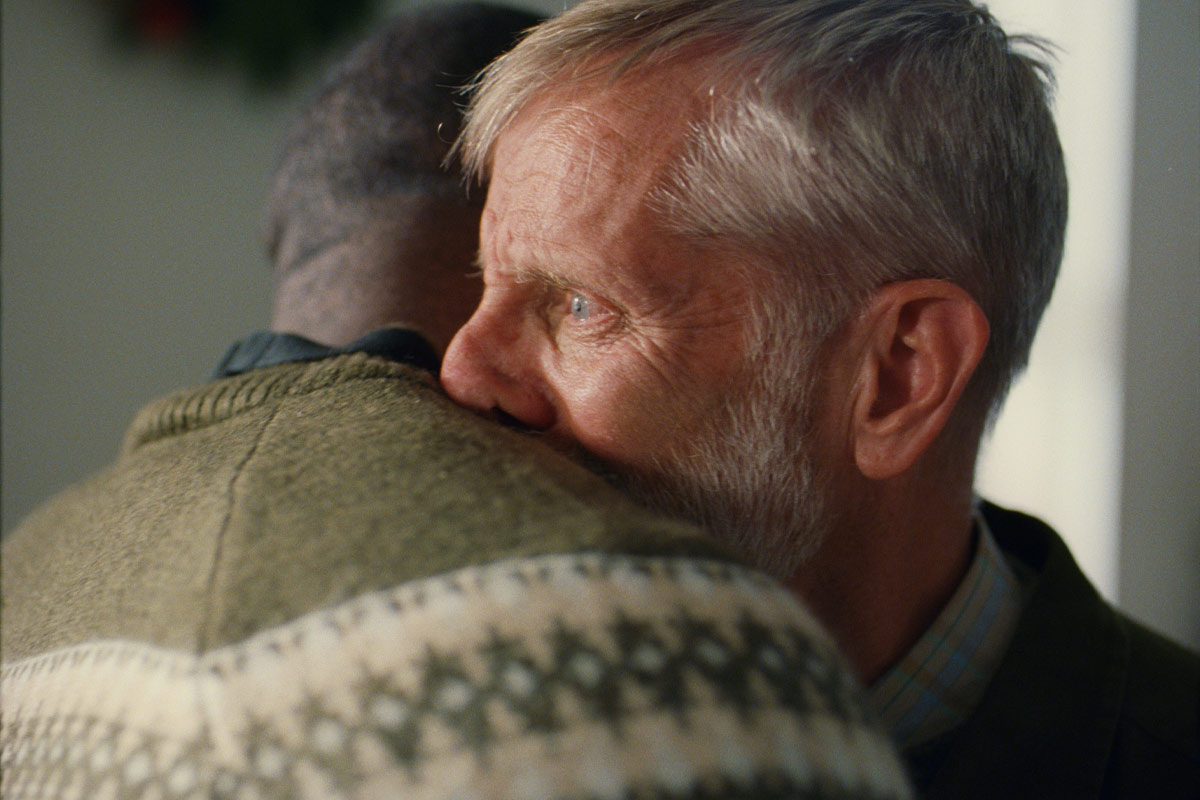




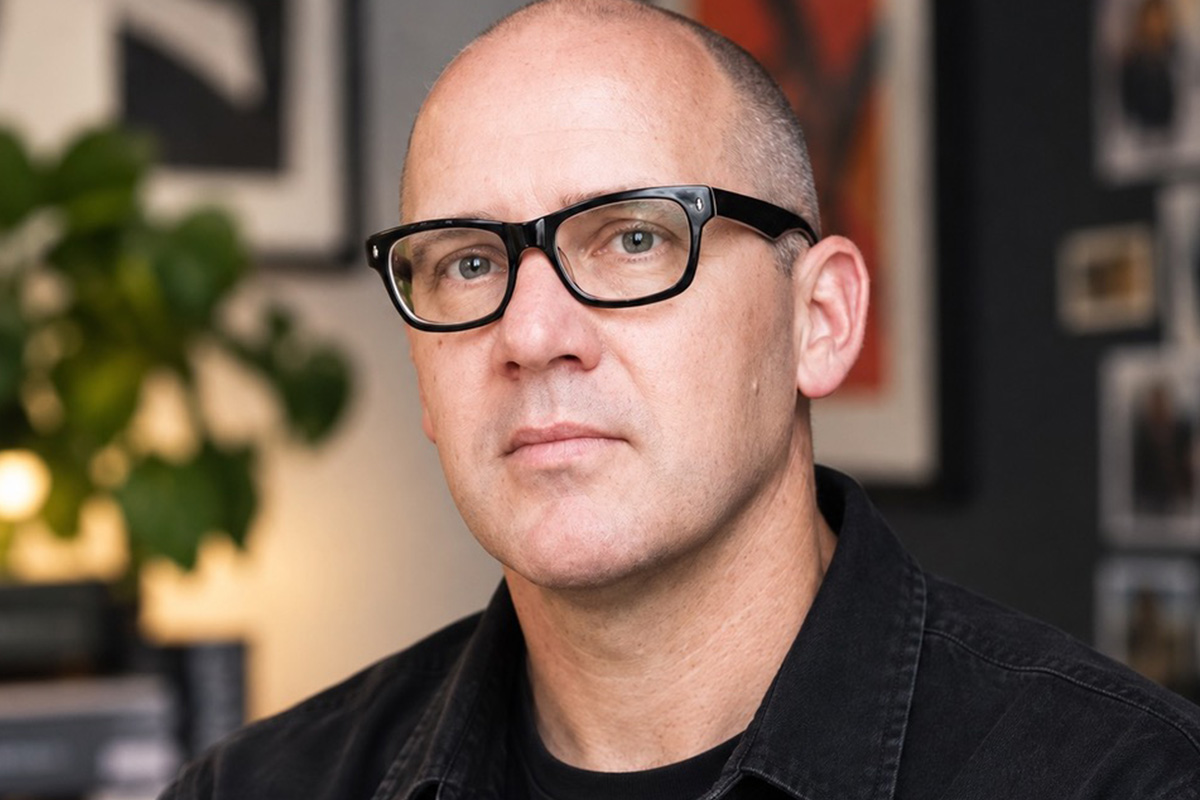
They say the secret to great editing is in the timing. Ditto with comedy, too. So this should make Abandon Editorial’s Joaquin Machado something of an expert on both. This editor’s comedy commercials are the kind that make you laugh out loud, often from that unexpected twist that comes with the next scene that he’s timed just exquisitely to bring out the guffaws. Don’t believe me? Check out when the guy in his spot for Hint flavored water licks the cheek of the guy next to him and you’ll see what we mean.
Known not just for his comedy chops but also his offbeat approach to storytelling, Joaquin worked his way up the post ranks on the West Coast, spending time at such companies as HutchCo, Uppercut and Nomad, while freelancing for shops in between. Along the way he’s cut spots for brands like BMW, Gatorade, Toyota, King’s Hawaiian, Subaru, Denny’s and lots more.
As for where he got his start, that’s where the punk part comes in; a SoCal native, he segued from playing in punk bands to hanging out with skateboarders and film industry youngsters, which led him, curiously, to the editing suite. His views on cutting comedy, and his career path, make for an interesting story, which is why The Howler caught up with him recently for a chat. Here’s what he told us:
Where did you grow up? And where did you go to school?
Joaquin Machado: I’m originally from Inglewood, California, but I mostly grew up in El Segundo, a small beach town just south of LAX. I went to El Segundo High School and then earned a degree in writing from Loyola Marymount University.
In what ways, if any, does your cultural background (home life, education, passions, teenage hijinks, etc.) influence your work as an editor?
Joaquin: I grew up playing punk music and obsessively watching surf and skate movies. I think both had a pretty big influence on the way I edit, especially my sense of timing and musicality. Playing music taught me a lot about rhythm and when to hit a beat. And I was really influenced by the humor in skate movies, too – the irreverence and spontaneity of them. I think that sensibility definitely finds its way into my work.
How did you get into the film business? And what attracted you to editing in the first place?
Joaquin: I grew up in L.A., so I had a lot of friends who worked in different parts of the film industry. After college, I found myself waiting tables and playing bass in a punk band. My friends would invite me to film industry parties, and I remember thinking it seemed like a lot more fun than waiting tables. So I started applying pretty much everywhere in Los Angeles. Eventually, I got hired to work in the vault at Nomad in Santa Monica. With the help of amazing mentors like Tom Muldoon and Jim Hutchins, I worked my way up to becoming an assistant there, and eventually left to join HutchCo, where I eventually became an editor. I was already an assistant editor at Nomad before I realized I actually wanted to be an editor, and fortunately HutchCo gave me that opportunity.
What do you find most gratifying about the editorial process? What gives you the most pleasure once a job has been complete and you see it out in the world?
Joaquin: I love the constant problem-solving that happens in the editorial process. It’s really challenging to tell a story or land a joke within the very strict time constraints of a commercial, and I enjoy figuring out how to make all of that work. It’s also really fun when you get to make something that’s so crazy or unexpected that you’re surprised it actually gets made.
In recent interviews you talked about how you made the transition from being an assistant to being a full time editor, and what it meant for your career. How has the role of the assistant changed since you came up? What’s had the biggest impact on how editors work with their assistants?
Joaquin: When I came up as an assistant, I was pretty much in the room with the editor at all times. That proximity was incredibly valuable, because I learned how to read a room and get a sense of what creatives were really asking for – even when they weren’t necessarily saying it directly. You learn how to find the best creative solution while making sure everyone involved feels like their voice is being heard.
Today, I feel like assistants, much like agency creatives, are often spread too thin across too many jobs. I understand why: it’s more efficient, and assistants are incredibly capable of managing all those responsibilities. But I do think something gets lost in that model. When you’re constantly jumping between projects and tasks, you have less time to sit alongside an editor with clients, observe the process, and develop the creative instincts that ultimately make you a better editor.
For me, that hands-on time in the room was a huge part of how I learned. I worry that assistants today aren’t getting the same opportunity.
What drew you to comedy? And how much of the ‘funny’ in a TV commercial comes from the script or the performance versus the timing of the cut?
Joaquin: I’ve always loved comedy. I actually wanted to be a stand-up comic, but after playing in bands I realized I really don’t like being in front of a crowd. When I was a kid, my parents introduced me to Looney Tunes and Mel Brooks, and eventually I discovered surf and skate videos and Big Brother magazine. All of those things had a big impact on my sense of humor and, especially my understanding of comedic timing.
When it comes to commercials, I think the funny comes from a combination of the script, the performance, and the timing of the cut. Ideally, it’s a relatively simple idea that’s executed really well, with enough space in the script and performance to give me room to play with the timing. It’s always great when there’s space to hold a moment, to really land a joke.
Speaking of comedy, what’s your favorite comedy spot from your work? And do you have a favorite comedy spot or campaign you’ve admired over the years?
Joaquin: I have a couple of favorite comedy spots that I’ve worked on. One of the first spots I did was a Denny’s spot called “Nannerpuss.” It was a very simple idea, but it wasn’t supposed to be. There was one really bad take, where everything completely fell apart, and it was so much funnier than the script. We ended up leaning into it. It’s the only spot I’ve ever worked on where, instead of removing the rigging in post, we actually went out of our way to make all of the strings more visible.
Another favorite was a Hint flavored water spot I did with Funworks. The whole campaign was completely ridiculous, but the “Pie Eating Contest” spot (a Super Bowl ad from 2020) was my favorite. It’s completely absurd, but everyone plays it completely deadpan, which makes it even funnier.
My favorite comedy spot of all time, though, is “Evil Beaver,” edited by Jim Hutchins for Miller. It’s absolutely amazing. It’s one of those spots that I can watch over and over and still find funny.
You’ve worked at a number of great editorial houses over the years, and spent some time as a freelancer, too. What’s the best part of being on an editorial house roster? And what are the best parts about living an independent life?
Joaquin: There’s definitely security in being on a roster, but there’s a lot of freedom in being on your own. It’s great to have the ability to walk away from jobs you don’t want to do, take some time off, or travel whenever you want. That independence is really appealing. At the same time, there’s something very nice about having the security of a guaranteed paycheck. I think it really comes down to what you value at different points in your life. I’ve enjoyed having both experiences, and each has its own advantages.
Looking ahead, with the impact of AI and the shift towards more in-house work at agencies and brands, where do you see the role of the editor in the commercial-making landscape? What’s the value of having editors work at independent vendor companies versus at in-house units?
Joaquin: The impact of AI is huge. I worry more about the possibility that AI is numbing the viewer than I do about AI getting better at making content. It’s improving very rapidly, but I’m not sure how well it deals with fields where there is no right answer.
AI can put out options, but I don’t think it’s finding the reactions between takes, or knowing when to just sit on a bad take long enough to find the humor in it. Those are the kinds of decisions that come from instinct, experience, and understanding the people you’re working with.
I love editing because I don’t think there’s a right way to do it. The best edit is often about finding something that nobody knew was there until you put the pieces together. That’s where I think editors still have a lot of value, whether they’re working at an independent editorial company or within an in-house unit.