



The Super Bowl has come and gone, and many were calling it ‘the AI Bowl,’ owing to the prominence of AI brands and AI technology seen in the commercials. And while AI found its way into more than one commercial, there were luckily no horror shows, as early AI imagery have given us.
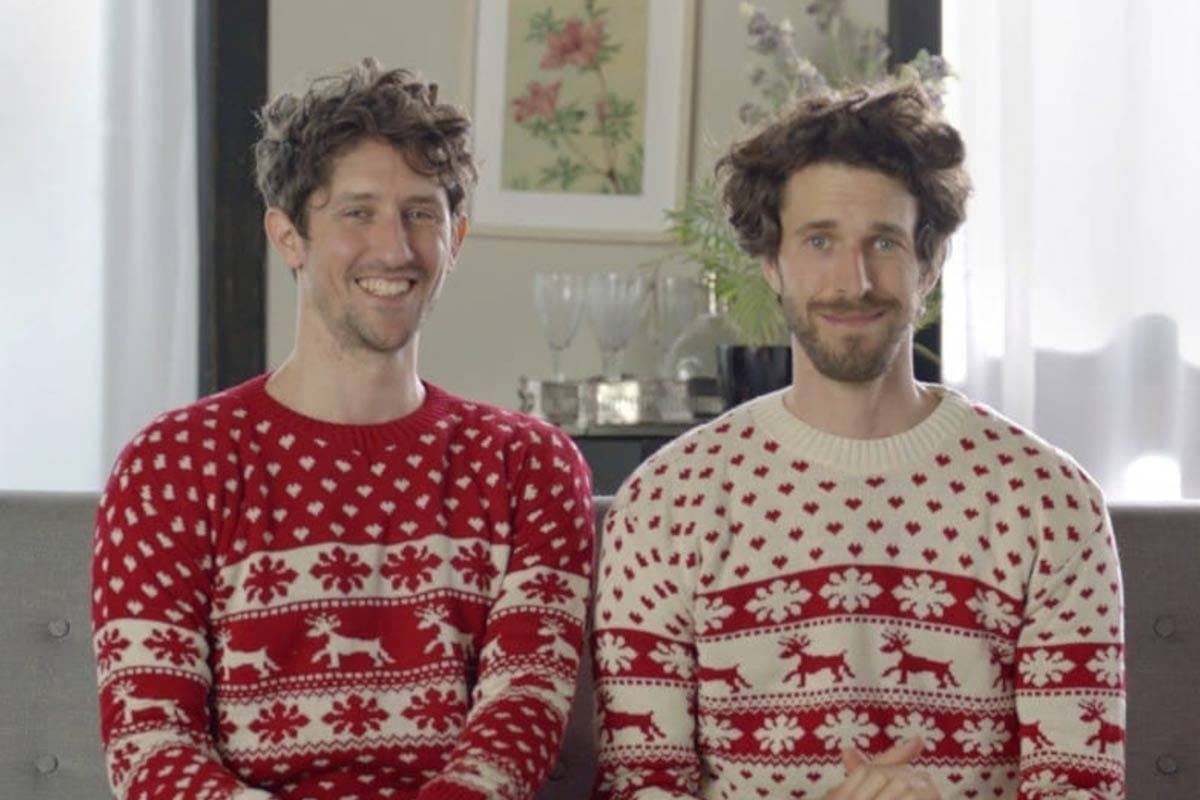
When it comes to utilizing this as yet another tool in the visual arsenal, the directing team known as Too Short for Modeling has a pretty good grasp of how to do it. Currently signed to the production company UnderWonder Content, the duo – better known as the writing and directing duo of Noam Sharon and Tal Rosenthal – have become adept at using AI for comedic content, which they do with razor-sharp skill and a penchant for absurdist sight gags that’ll make you laugh out loud.
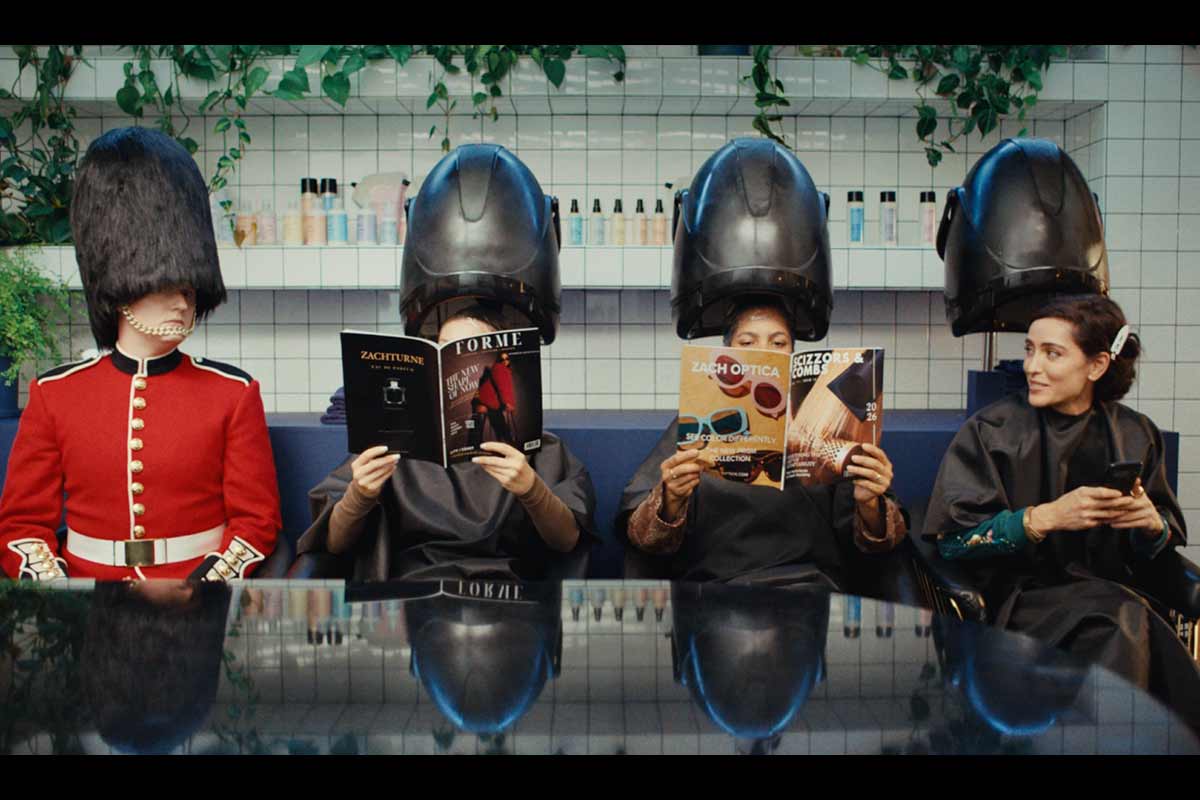
A perfect example was their spec spot for Liquid Death. With a nod to “Fargo,” it features a burly, mustachioed state trooper pulling over a hot guy in a beat up car who proceeds to rattle off a litany of reasons why he thinks he’s been pulled over, such as the dead body hanging out of his trunk, the human trafficking victims in the back seat or the spouting whale he left behind on the highway as road kill. Each reference gave the directors a chance to use AI to create a split-second vignette that looks like some skewed, altered reality – close enough to the real thing, but just off enough to be funny.
But make no mistake, these guys work for brands, too, as evidenced by their work for Fiverr and Dollar Shave Club. The former spot, “Prompt and Punishment,” showed “Garry,” a frustrated everyman who rants about how AI is going to use its powers to get back at him, with hilarious results that range from exorcism to gangland rub outs. Similarly, their work for Dollar Shave Club, “We Put Our Money Where it Matters,” tapped AI to create otherworldly vignettes amongst a group of businessfolk meeting in a board room.
The Howler caught up with them recently to get an inside peek at how they utilize AI to make their comedy work. Here’s what they told us.
So what’s the key to your AI prowess? How do you prevent your forays into this shape-shifting technology from turning into an experience like that of ‘Garry’ from your Fiverr spot?
Too Short For Modeling: Wow. Poor Garry.
Honestly, I think we’re all headed toward a Garry-like future eventually. But for now, we’re mostly using AI as leverage.
We started messing around with AI at a time when we were completely unemployed. Now, thanks to it, we’re doing more projects than ever, and we’re no longer boxed in creatively, which is a huge gift. So we’re enjoying that freedom while it lasts, right up until the AI gods decide it’s time for us to become their servants.
How do you approach the way you utilize AI? It almost looks like you’re tapping this tool as a hybrid combo of CGI and robust color grading to generate these ‘close to real but just a bit off center’ visuals.
TSFM: We’re basically trying to avoid that AI slop feeling. You know, those overly polished, too pretty, hyper-slick AI aesthetics.
A lot of our references come from films of the ‘80s and ‘90s, before everything had that super shallow depth of field, blurry backgrounds, and overcooked effects. These days, so many films already look like full-on CGI, even when they’re not. We’re kind of aiming in the opposite direction, trying to create something that feels more practical, like movies shot back in the film era.
But above all, our main guiding principle is that it has to be funny. Comedy comes first. When something is genuinely funny, people are much more forgiving and stop obsessing over every visual detail that might be a little off. For us, humor always wins.
Let’s talk Uncanny Valley. Where do you draw that line between comically believable and over the top when it comes to using AI to make or modify your imagery, especially of people?
TSFM: This probably happens to us about ten times a day. Pushing the tech too far is kind of the default, and for us, it’s usually very obvious when we’ve crossed that line.
The real red line is always storytelling. The moment a shot stops clearly telling the story it’s supposed to tell, that’s when we know we’ve gone too far. A lot of the time, fixing that means changing the direction rather than forcing the AI. Maybe a shot is too ambitious or too clever for its own good, so we’ll swap it for something simpler. And almost always, the simpler shot ends up being the better storytelling choice anyway.
Great comic performances seem to underpin your AI work. How important is getting the casting and the direction right before you start layering on the AI?
TSFM: Casting is a process. That’s a big deal for us, and it’s one of the things we spend the most time on at the very beginning.
We basically have two casting approaches. One is generating a lot of images until we land on the right actor. That usually happens when we’re working with an agency or a client where everything needs to be approved step by step.
But when we’re working on our own, or with a very flexible client like Dollar Shave Club, we often go straight to text-to-video. We describe a character in text and let the AI generate shots from that description. Surprisingly, that approach often leads to better casting. The machine is predicting something based purely on text, and we tend to be more genuinely surprised by those results.
You tend to write a lot of the stuff you direct. What role does that play in your ability to create such a distinctive look?
TSFM: Our biggest advantage as writers really shows up during the production process. On almost every project, we hit moments where the AI just can’t generate something, or we suddenly want to rewrite things on the fly. We end up rewriting our projects dozens of times while we’re working, which is a huge advantage.
We’ll watch a cut and realize a joke isn’t landing, and then we get the chance to reinvent it. That’s a privilege not every director has, and it’s an incredibly powerful tool. We’re also totally comfortable working with scripts written by others, as long as we can find ourselves in them.
What are your preferred AI tools? And is it just the prompts you use, or is there some secret TSFM recipe?
TSFM: The real secret is trial and error. We started out using only Google’s VEO3, and since then, we’ve gotten into the habit of testing almost every shot across two or three different platforms.
Right now, we use Kling, Seedance, and VEO3 a lot, but whenever there’s a new update or a new platform drops, we jump on it immediately. Working with AI is a curatorial process. Early on, you have to lock in the look and the feeling you want to maintain. As a director, your job is to protect the project from drifting away from that vision and turning into something else.
That’s true for AI, but honestly, it’s true for any project.
How do you decide which projects or sequences get an AI treatment versus straight live action?
TSFM: These days, we see two types of clients coming to us. The first specifically want AI; usually to save money. The second don’t really care how the work gets made and are happy to pay for live action.
There are projects that come to us asking for AI, where we’ll say, honestly, this just isn’t right for the idea. It would be much better to shoot real actors. So we don’t feel the need to push AI into everything.
We do use AI a lot for previs, experimentation, and especially in post production. If we need to enhance something, add a shot, fix issues from set, or swap locations, AI is incredibly practical.
As for drugs, we both usually go for full doses rather than microdosing.

Finally, where does the TSFM moniker come from? And how tall are you, for the record?
TSFM: We’ve been working together for about 16 years, and the name came up during the very first weeks of our collaboration. We were looking for something catchy for a YouTube channel, and this is what stuck.
Back in high school, we were both pretty short and very aware of it. We were definitely a little hung up on that at the time. These days, it’s not really an issue anymore.
For the record, we’re both about 5’9.