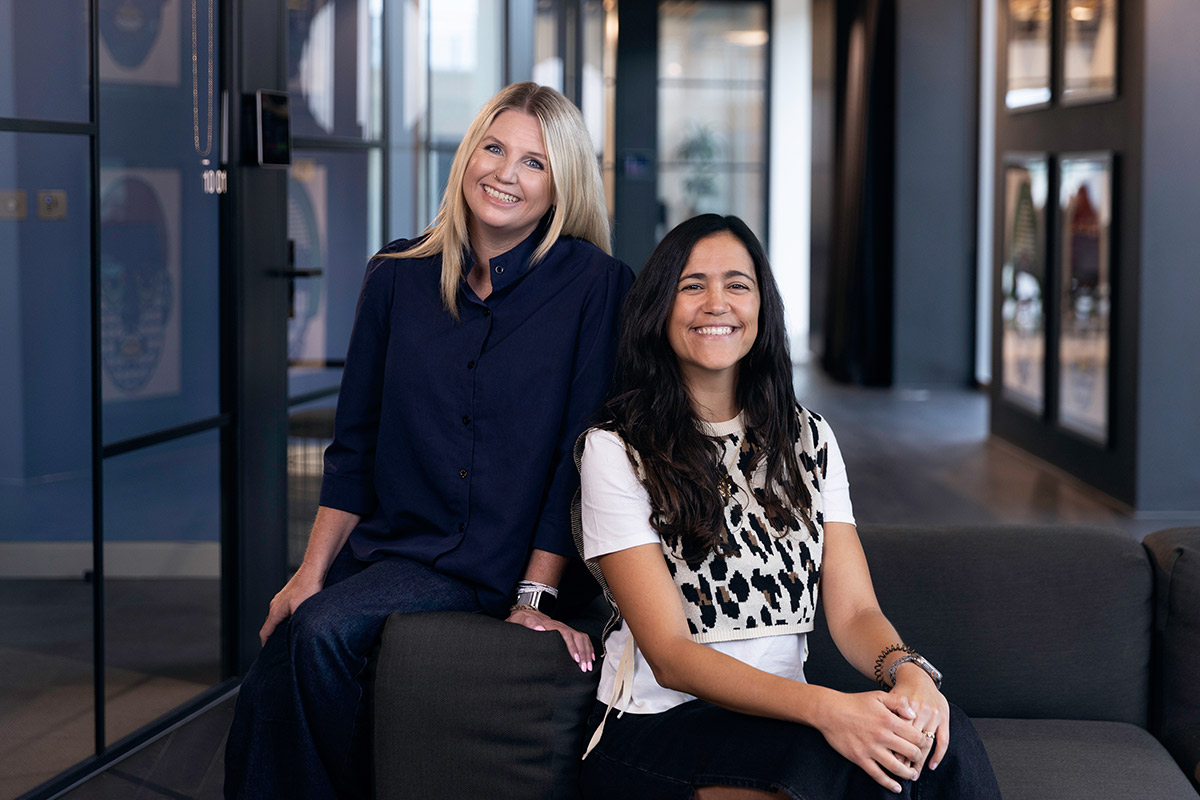




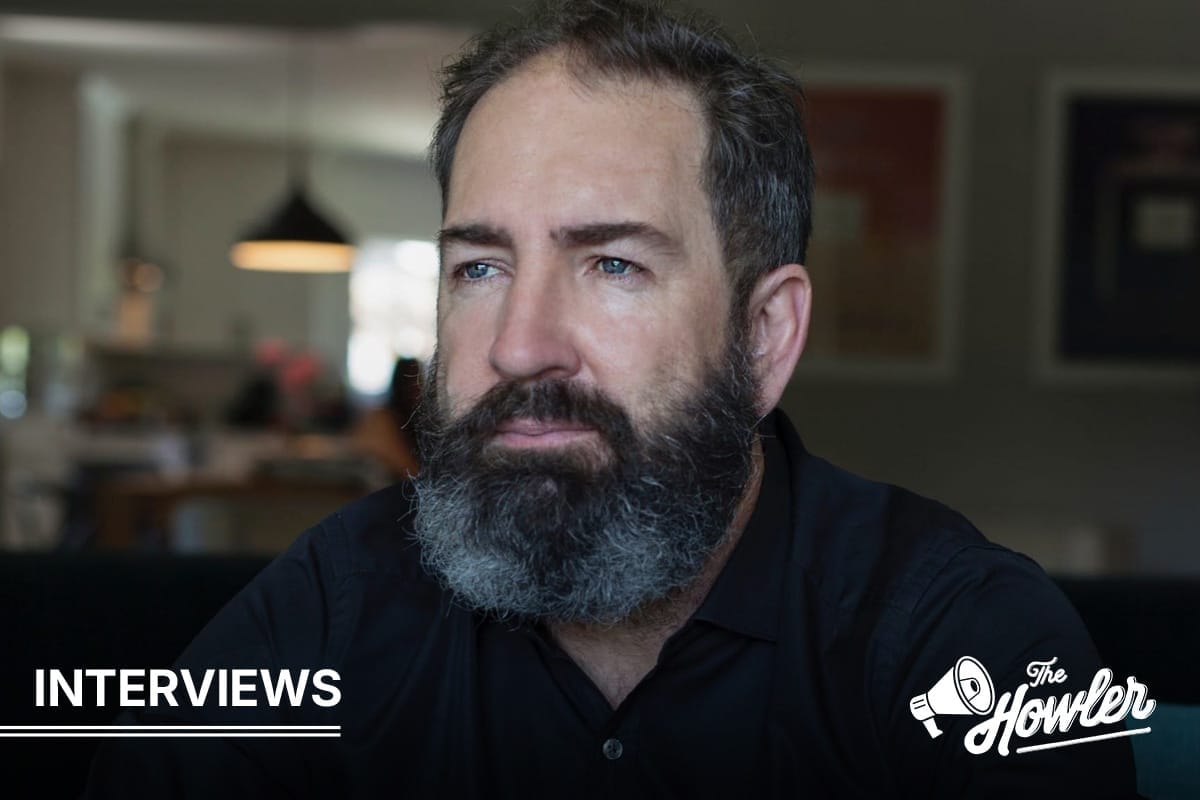
Wondering where the commercial production industry is headed? Well, just go to the chief for guidance – or, in this case, ‘Chiefy.’ That would be John Duffin, Co-Founder and Executive Producer at Emerald Pictures. John launched the company with his partner Mara Milićević in 2019 after a career that’s seen him work with some of the top production houses in the industry, collaborating closely with some of its most esteemed directors.
After working as a line producer for some of the 1990s’ most iconic music videos, he joined Epoch Films, where he worked for over 15 years, first as head of production, then executive producer. John then went on to build Framestore Pictures, a production company under the umbrella of Oscar-winning global company, Framestore, before launching Emerald in 2019 with his partner Mara Milićević.
John and Mara describe Emerald as a family of filmmakers and storytellers, and his views on how directors should hone their skills and build their careers – whether they be newbies or seasoned vets – is roughly the same: just get out there and keep on doin’ it. “We’ve all been brought together by a shared purpose for bringing ideas to life,” he says about the company.
The Howler wanted to know how John – better known to clients, colleagues and peers by his aforementioned nickname, ‘Chiefy’ – sees the challenges facing the business today, and how he and Mara approach the task of managing and counseling directors in these most tumultuous of times. He shared his lesson plan with us, and we hereby pass it on to you.
You’ve been in production for some time and seen lots of changes. From your POV, what’s the biggest challenge independent production companies have had to face over the years? And what poses the single biggest threat to their continued growth and success in today’s marketplace?
John: One of the biggest challenges, I believe, is the continuing erosion in trust. Trust is a two-way street – between clients / agencies and production companies – and dealing with that erosion is one of the thorniest issues of late. The relationships that used to be built on long-term trust have become more transactional as the business has evolved.
With the growth of technology and information coming at you in a 24-hour live stream, the pressure is on for everyone to deliver. The agency and client have to keep up with the growing demand for content on all platforms, and it’s competitive for all.
The biggest threat now is losing that trust entirely, when decisions are made purely on cost or speed instead of creative partnership. That’s when great work suffers. Not to mention negotiating payment terms and bidding multiple countries for competitive bidding requirements from agencies and clients. While we’re happy to do it, these are the realities and challenges we face these days.

What brought you to the US? Why come here to pursue your career? When you first landed here, what were your goals? Do you feel you’ve achieved them?
John: My father was a lieutenant in the British Navy, a well-read man who’d traveled the world. He was born in County Wexford, Ireland, and always dreamed of coming to America and bringing his family with him. At the time, it was just my sister and me. My two older brothers had already emigrated to America, and both ended up working in the film industry. He used to say, “You’ve got to get to America, even if you have to swim.” That was his dream—to get us here, and he did.
When the recession hit in 1980, his factory closed down and he went on “the dole,” which is like unemployment here in the States. At dinnertime, my dad would look at a few potatoes and say, “John, we need dinner,” and I’d go out with my friend Jimmy Shea with either a shotgun or a fishing rod, depending on the season. We’d be back by six with fish, duck, or pheasant. That was dinner. It wasn’t for sport, it was survival.
So you ask what brought us to America? Hope and a dream for something better, a different time, obviously. Have I achieved my goals? One thousand percent. It is a privilege to work in this industry. I came from very humble beginnings, so I am grateful every single day and very fortunate. I started in the art department with my brother, then got into the production side and never looked back.
Recent work from Emerald Pictures includes this Ad Council PSA, directed by Peter O'Brien for Leo Burnett.
How has the process of guiding and nurturing directors’ careers changed over the years? What are you doing differently for the directors on your roster today than you were just a few years ago?
John: I’ve always believed in nurturing directors. It’s part of the job. Filmmaking is a process; you’ve got to surround them with the right people, keep them current on new technology, and help bring their vision to life. Prepare them, coach them, support them in working with crews, agencies, and clients.
I think directors need to keep telling stories. I don’t care if it’s a man or woman against a white background shot on an iPhone. Don’t let technology or the desire for perfection stop you. Grab the camera and go out and shoot. If you’re a mountain climber, film that. If your kid makes a snowman, make a movie about it. Always be shooting. Tell your own story. Find something that sparks you. Go somewhere that challenges you. Be curious. Be brave. And it’s okay if you mess it up. You should only be doing it for yourself. Fail, fail, fail—that’s how you learn.
So we push our directors, even the most seasoned ones, to keep creating. Which, compared to two years ago, is even more critical than ever. Both the younger directors as well as the more experienced ones have to push the limits now and strive for their work to be clever and different – a very steep challenge in any era.
What’s been the most famous (or infamous!) campaign or project you’ve been associated with during your career? What made it so?
John: The most fun and well-known commercial work I’ve done would have to be the “Everyday” campaign for the iPhone.
That was the first campaign that took the iPhone off the stage/white cyc of the Mac vs. PC era (which I also EP'ed) - the first time you saw the phone outside the soundstage. It was a real moment in time. We shot all over the world with a directing collective of Emerson College grads who were inspiring and fun. You felt like you were part of something special, working with TBWA\Media Arts Lab - a strong production team, talented creative team, and a client, who had without question, the coolest product in the world.
The other one was the music video “Linger” for The Cranberries—black and white, an Irish band, first time in America. I picked them up from the airport myself. They were from my homeland, and that project was just pure joy—raw, energetic, and real. It was so fun and inspired.
What lessons do you try to convey to younger people in the business?
John: Be yourself. Make stories that matter to you. Watch old movies. Study how the Masters tell stories: the writing, the lenses, the lighting, everything. Immerse yourself.
Don’t plagiarize. Be yourself.
Look at the scene in “American Beauty,” the white plastic bag floating in the wind. It’s poetic, it’s beautiful, it is beyond simple. Be inspired by those moments but stay true to your own perspective. That’s how you become stronger as a filmmaker.
If you care about something, if you’re passionate about it, don’t wait for a camera crew. Grab the camera and start shooting. Don’t be afraid to fail. You’re never going to tell stories unless you get out there and do it. Don’t wait for the phone to ring or for someone to hand it to you. Go. Get on a plane. Take a road trip. Just do it. It is a different landscape so one must adapt and overcome.

So how’d you get the nickname ‘Chiefy’? More importantly, how would you describe your style as an EP and company owner? Are you a soft touch, or do you bark orders? Or somewhere in between?
John: That started back when I was a line producer. Jeff Caulfield – a dear friend and a man among men – was a terrific production manager I worked with all the time. Whenever there was a production challenge, he’d come to me and say, “Alright, Chiefy, here’s what’s happening.” So full credit goes to him. Then, along the way, when I started producing for directors like Stacy Wall, Matt Aselton, Phil Morrison, Dave Dornberg (rest his soul), and many more, they all jumped on the ‘Chiefy’ train. Soon, agency folks and clients were calling me that, too. I’d pick up the phone, and before I even said hello, I’d hear, ‘Chiefy!’ Depending on the tone, it was either total fun, or something like ‘Chiefy, I need your help.’
As an EP, you have to have composure, poise, and patience. Everyone can be working away and spinning out of control, but someone has to stay calm. You need to instill confidence and look after everyone. You’re the juggler – and I’m a Gemini, so I can do that; it comes easy to me. Clients and agencies work on projects for months, sometimes a year, before they ever get to shoot. So when we finally all come together, it should be the fun part. I see my job as making sure that process is rewarding, safe, and enjoyable for everyone involved.
I don’t bark orders, I’m the opposite of that. I don’t like raised voices. We’re here to make great work and have a good time doing it. Production is about collaboration. It’s about bringing people together to make something we can all be proud of. ‘Chiefy’ is a problem solver and dream maker. ?
What kind of skills do directors need to succeed in today’s environment that they didn’t need just a few years ago? And how will their skill set need to evolve as we move into this strange new world of generative AI?
John: AI isn’t our biggest threat – yet. The key word being “yet.” It hasn’t replaced the human condition or potential. Directors need to be collaborative with clients and fiscally responsible, especially if the end goal is to be a filmmaker and actually direct movies. Directors, when directing films, have to answer 250 questions a day and adhere to a tight shooting schedule; if they don’t, they’ll be replaced.
Technology will always be changing, and directors will keep adapting, but their core skill hasn’t changed. It’s still about understanding people, emotions, and truth. That’s something no algorithm can replicate. I truly feel that AI is another tool that directors will utilize to help advance their storytelling abilities as filmmakers: they’ll use it to inspire, not replace, to enhance a character in a story, not replace the actor, etc. They should look at it as a way to make them stronger filmmakers, not a lazy director.
So we’ve come full circle – I want to help directors, agencies, clients, and the public enjoy what is produced not by one director, but by collaboration between many. As they say, it takes a village. In the end, it all comes down to storytelling, touching the viewer and having an emotional effect on them. That’s what connects us. And nothing, AI included, beats that.