



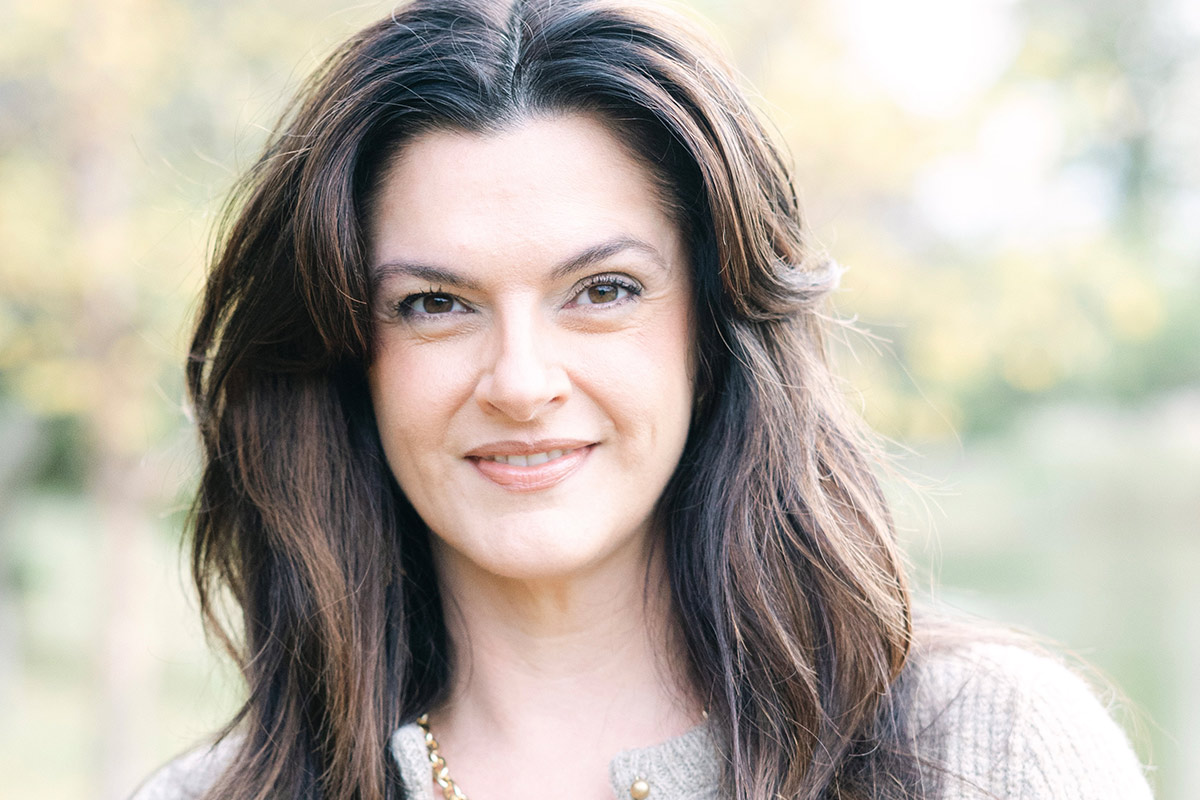
When The Howler published a Q&A with Chinkara Singh on the value of creative producers back in July of 2025, it generated the highest number of impressions on any of our social posts up to that date. Then Senior VP, Group Director of Creative Production at the IPC healthcare agency AREA 23, Chinkara’s comments about the role of producers play in getting great work in front of consumers, and the intrinsic value of that role, resonated with our readership not only at independent production and post houses, but on the agency side as well.
Chinkara’s been a busy woman since then. In November, she was tapped to be Chief Production Officer at Havas Health Network, a new position and her first time in the CPO role. In addition to managing the production landscape across the Havas Health agencies, she’s been highly visible at industry forums both in the US and in Cannes, and has been called on to serve on juries for a range of prestigious industry competitions.
Throughout, she’s continued to preach the message of how production makes the ideas that the creative community generates come to life. At the same time, she’s leading her own producers into the uncharted territories of staggeringly complex new technologies, and making sure that they don’t obscure the human factor in this intensely people-powered business.
The Howler caught up with her recently to see what life’s been like at Havas, and how her new role has influenced her insights and opinions on where things are headed. Here’s what she had to say.
How has your role changed now that you’re the Chief Production Officer? What’s been the biggest shift for you since moving over from your post at Area 23?
Chinkara Singh: At AREA 23, I spent years obsessed with making exceptional work. Now I’m obsessed with a different question: how do you make exceptional production repeatable at scale? That’s been the biggest shift.
As Chief Production Officer, I’ve gone from thinking deeply about one agency and its work to thinking about the architecture behind an entire network; our people, culture, systems, technology, partnerships and, ultimately, how all of those things make the work better.
And I’ve become pretty relentless about one thing: production needs to get in earlier because powerful creative is powered by production.
The old model has been tossed out. No more handing producers a fully formed idea and asking, “How much and how fast?” Bring us the brief. Bring us the impossible idea. Bring us the “we have no idea how we’re going to pull this off” problem. That’s where producers bring the magic.
That’s what I mean when I talk about the architecture - rebuilding from the ground up. Thinking from the brief, through every workloop, all the way to delivery and beyond. How do we make it? How can we make it smarter? What else could it become? And what are we building today that we’ll wish we had six months from now?
I spent a lot of my career making great things. Now I get to help build the machine that makes great things possible. That’s what we’re building at Havas Health.
What was the brief that you were given when offered the Havas Health job? How have you gone about satisfying that brief?
Chinkara: Eric Weisberg (Global Chief Creative Officer at Havas Health Network) gave me a pretty simple brief: build a production team for 2035. No pressure.
What I love about that brief is that you can’t solve it by just reorganizing the production department we have today. You have to ask what production is going to need to be ten years from now.
For me, that means fostering a group that’s more connected, fluent in scale and modular content, comfortable moving across channels, and curious enough to keep evolving as the technology does. Because the tools are going to change. The expectations are going to change. Probably faster than any of us think.
We’ve focused on stronger collaboration across agencies, clearer workflows, investing in our people, and exploring how AI and new production architecture can create efficiency without sacrificing the thing I refuse to sacrifice: craft and story. That's the center of our purpose.
So 2035 isn’t a destination at which we’re waiting to arrive. We’re building it now.
Have you set up any new initiatives now that you’re at Havas, any new mentoring or training programs? Any new outreach to discover new talents and resources for producing content?
Chinkara: One of my biggest priorities has been investing in the producers themselves. The best production departments aren’t built on process alone, they’re built on trust.
I’ve also built and started teaching our Three Levers of Production: Three areas producers can actively use to make the work and the business stronger. I’m not going to give away the whole playbook here, but we’re putting them into practice now, and they’re working.
Alongside that, we’ve been creating stronger ways of working across agencies and, just as importantly, creating a culture where producers feel safe sharing the wins and the losses. There’s a tremendous amount of learning in saying, ‘well, that didn’t work!’ If we only share our highlights, we’re leaving half the education on the table. Sharing openly builds trust, and accelerates learning.
In addition, I’ve been deliberately getting outside our own walls: Judging at AICP, MM+M, and IADAS, speaking at industry events and with students at Cannes, and building deeper relationships with creators, production companies and people pushing emerging technology. What's been especially fun is that many of these are people I grew up with in this industry. We've all gone off, learned different things and built completely different toolboxes. Now we're coming back together at this incredibly transformative moment for production, bringing all of that thinking with us.
The industry is changing way too quickly for any of us to pretend we have all the answers. You don't build future-ready producers by teaching them what you know. You build them by teaching them to keep learning.
Speaking of Cannes, you were all over the place there this year, not to mention appearing at AICP Week and doing panels, interviews and social media posts. What stood out for you this year from those gatherings?
Chinkara: Every year, I carefully plan Cannes and AICP Week, and every year I come away totally enriched, and usually exhausted, in the best possible way.
What stood out this year is that AI has become less of a novelty and more embedded in our actual work loops. And I deliberately say loops, not workflows. When AI is built into the architecture of production, it should enter at multiple points, accelerate or expand the thinking, and then loop back into traditional craft and human decision-making. It’s not one straight line from prompt to output.
That allowed the conversation to shift back toward something much more interesting to me: accelerated creativity. How can we use all of these new capabilities to make work, across channels, that actually moves people? Because faster isn’t particularly interesting if the work isn’t better.
I also felt a growing appreciation for production as a creative discipline. That’s where I’ve always believed it belongs. Producers help teams navigate complexity, uncover what’s possible and weave all the pieces together. Today those pieces might be AI, virtual production, creator partnerships, emerging tech or a global content ecosystem. Tomorrow it’ll be something we haven't named yet.
As a longtime agency producer, I’ve watched us adapt to wave after wave of change. This one is moving particularly fast. I said a while ago that production needed to be ready to sprint.
Well…we be sprintin’.
Tell us about the Camp @ Cannes experience. What was it like being able to bring your kid with you to the Lions Festival?
Chinkara: What an awesome Cannes to have my kids come along!
Honestly, it was one of those very real working-parent moments. Cannes moved its week, life didn’t move with it, and suddenly I had some juggling to do. As parents, we don’t always get the opportunity to merge our professional and personal worlds. This year, it became a necessity, and it turned into a gift.
Being able to share a place that has meant so much to my career with my kids is something I’ll always remember. They got to see this crazy, creative world we’re all so passionate about, and I got to experience Cannes through their eyes. That’s pretty special.
I’m incredibly grateful to the Female Quotient and Camp @ Cannes for recognizing that parents shouldn't have to choose between showing up for their careers and showing up for their families. Having thoughtful accommodations for kids and parents made something possible that otherwise would have been incredibly difficult. I also met some other working parents, too!
And I hope Camp @ Cannes keeps evolving. In fact, I'd like to be part of that evolution. There's a real opportunity here to rethink what inclusion at our industry's biggest gatherings looks like for working parents.
Sometimes making the industry more inclusive is as simple as making it possible for more people to actually be in the room.
Another big topic for brands is how to tap into the power of influencers and creators. How should agency producers approach the different ways that these sources produce the content that their audiences are consuming?
Chinkara: Collaboration has to be the key. Our job as producers is to build processes that protect the brand, the work and the people involved, while still giving creators the space to do what made their audiences follow them in the first place. We need to build spaces for them to thrive, not boxes for them to fit into.
That’s why I really value my partnership with our social and influencer team at Havas. They understand the communities, the platforms and where to drill down; production understands how to bring all the pieces together. Neither discipline needs to pretend it knows everything. We get smarter when we partner.
Creators don’t need agencies to teach them how to create. They need us to help make bigger things possible without taking away the thing that made them interesting. The future with creators is much less about control and much more about partnership.
Healthcare advertising has always been highly scrutinized, perhaps even more so in today’s MAHA environment. How does this influence the way work gets made? What’s the outlook for pharma work at a time when consumers are engaging with healthcare options and providers via new and still-emerging methods?
Chinkara: Healthcare advertising has always carried an extraordinary level of responsibility. We don’t just have to earn attention. We have to earn trust.
From a production standpoint, that means protecting both creative ambition and medical accuracy. But the way people engage with healthcare information is changing quickly. They’re not encountering a brand in one place anymore. They’re moving across social, creators, communities, search, AI-powered experiences and channels that probably don’t exist yet. So we have to stop thinking about production as making an asset and start thinking about building an ecosystem of assets.
That means thinking modularly from the beginning: What are we capturing? How can it evolve? Where else could this story live? What might we need six months from now that we can anticipate today? Production needs to build libraries that give brands the agility to respond without sacrificing accuracy, craft or story.
For me, that’s another reason production has to come in earlier. You can’t future-proof the assets at the end of the process. You have to future-proof the thinking at the beginning.
And no matter how many new channels, technologies or ways of consuming healthcare emerge, one thing doesn't change: people want healthcare information to feel human. Our job is to make sure it does.