



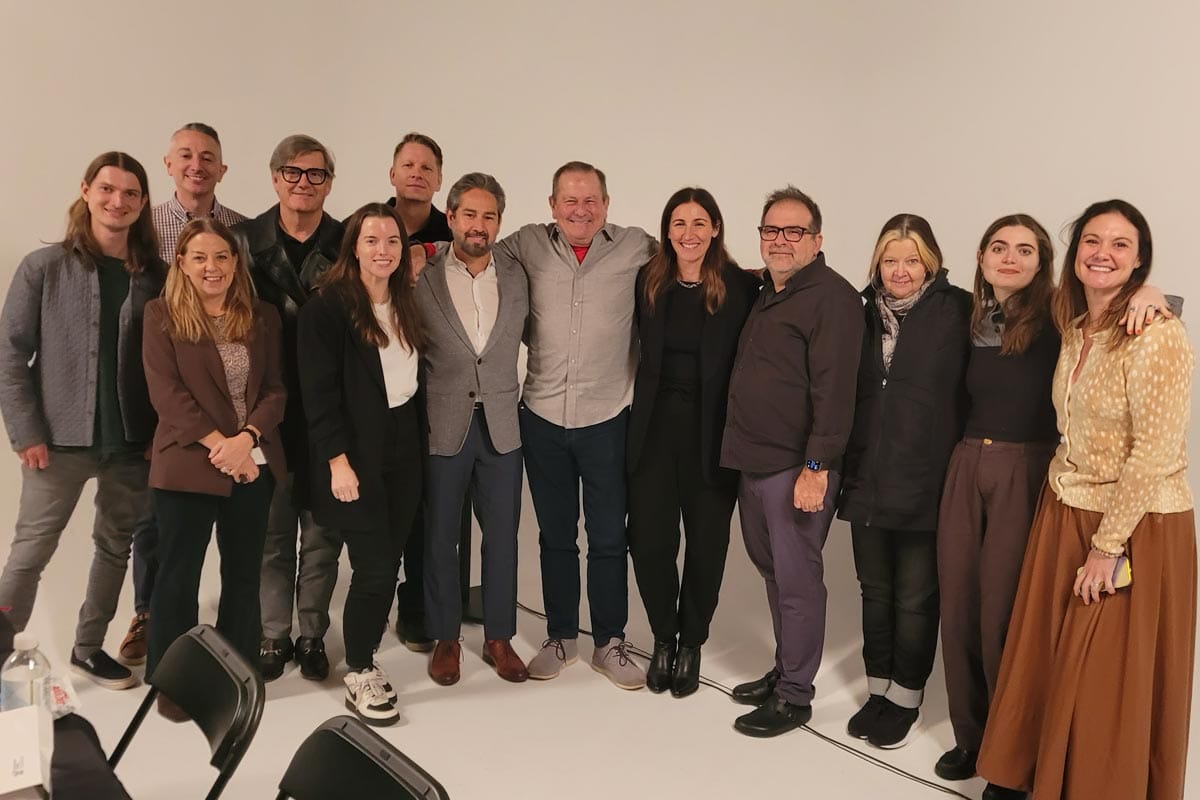
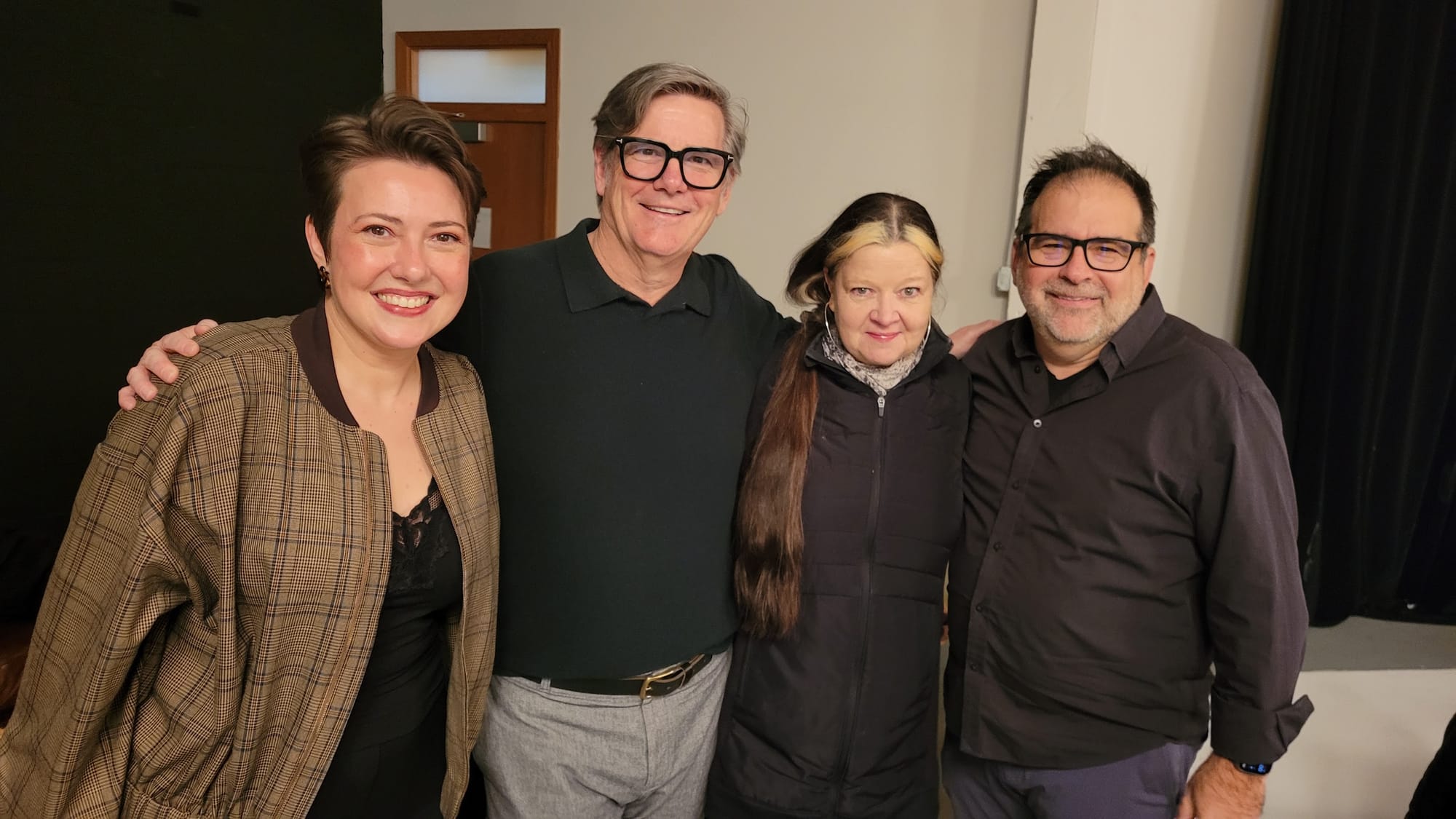
Seems you can’t get a handful of ad agency folks together these days without the talk turning immediately to the impact of AI on their creative work, their workflow, their compensation, and their business practices. That was certainly the case at the most recent Simian + Optimus Head of Production roundtable, held in Chicago. Hosted by Optimus President Tom Duff and led by The Howler’s editorial team, the gathering was the latest in our series of candid conversations among advertising’s top production execs. With almost a dozen HoPs in attendance, the discussion ranged from the impact of AI to the need to work with full transparency to the daunting task of staying on top of the latest information on this fast-moving technology.
The agencies in attendance ranged from holding company stalwarts to small indie shops, and not surprisingly, their approach to dealing with advancements in AI – from utilizing the technology to staying accurately informed on developments – varied widely. From global town halls on one end to relying on trusted production and post production vendors, the approaches ran the gamut, but in each instance, the motivation was simple: “We’re really trying to stay on our game and keep ahead of the trends, but also trying to be realistic,” said one executive.
One HoP raised the question of when, how and at what cost do agency production teams lean on AI for creating imagery: “We ask ourselves whether we should shoot something practically or try and do it in AI, and of course the question becomes, well, couldn’t we just do it in CG instead? And are we taking food out of people’s mouths in the process?”
While using AI to create product shots is something that’s already happening, taking it to a larger platform is a different task, and a heavier lift. “You still need a director and a storyteller, along with lots of other people, and the process requires a lot of post production work,” noted one HoP, “much of which is traditional finishing, so those people are still keeping busy.”

“Creatives are getting good at working with this, but not account people,” added another HoP. “One thing we know is that when it comes to employing AI, as agency people, we have the experience, the taste, and the vision to apply these tools to client work. Our contribution goes beyond just the prompts.”
For many, some truisms about working with the technology are becoming more clear: one is that if you spend the time to invest in these tools, “you can get good at it, but it’s still pretty hard to control. It also requires not just an integration of the post process, but an acceleration of that as well. I think what it means is that in the future, we’ll shoot less than we do now, but post more.”
The ability to suss out when something doesn’t look just quite right is still a concern. “We look at things differently than most people,” noted one HoP. “Consumers might just say, ‘Oh, that’s cool,’ but for us, we still see many things that need to be fixed. For example, objects can change from frame to frame, especially talent.”
“And for us, clients are putting pressure on us to use it, while legal is telling us not to,” noted a frustrated production exec. “Clients are wanting to use our level of AI adoption as a KPI, and they want to know how much overhead we’re eliminating.” Another concern, several noted, is the need for indemnification, of either the agency, the client or both. “The AI review process can take months for legal to figure out,” said one participant, “so in some ways we’re hamstrung with what we can do.”
Other related issues stand in the way as well: one is that for some shops, they are training their AI tools using only their own IP, which they find limiting. “It’s not as useful if we do it this way,” was the comment. Another complaint HoPs voiced was the need to rein in creatives. “We feel like we’re the Business Affairs people now; we used to tell creatives what production companies they could work with, and now they’re trying to do things on their own with Runway or other tools. They’re trying to go around us, and so we feel like we’re policing them.”
In other areas, the same pressures on production still exist: schedules, budgets, and expectations. “On every job we do, it’s how do we stretch the dollar and do it fast, and the client keeps asking how many people are on the job and everyone wants a billion versions, but they don’t have the money for it. And that’s what keeps me up at night.”
They’re dealing with creatives that don’t want to work in house, and the HoPs seemed to agree that much of the in house push, particularly on the holding company level, is a revenue grab that feels anti-competitive. “It’s about the money, not the craft,” said one HoP. “As producers, many of us feel safer with independent vendors. When it comes to talent and service, they win all the time. And for those shops that have large in house post arms, it’s almost painful to have to work with them.”