



Photo credits: Jerritt Clark/Getty Images
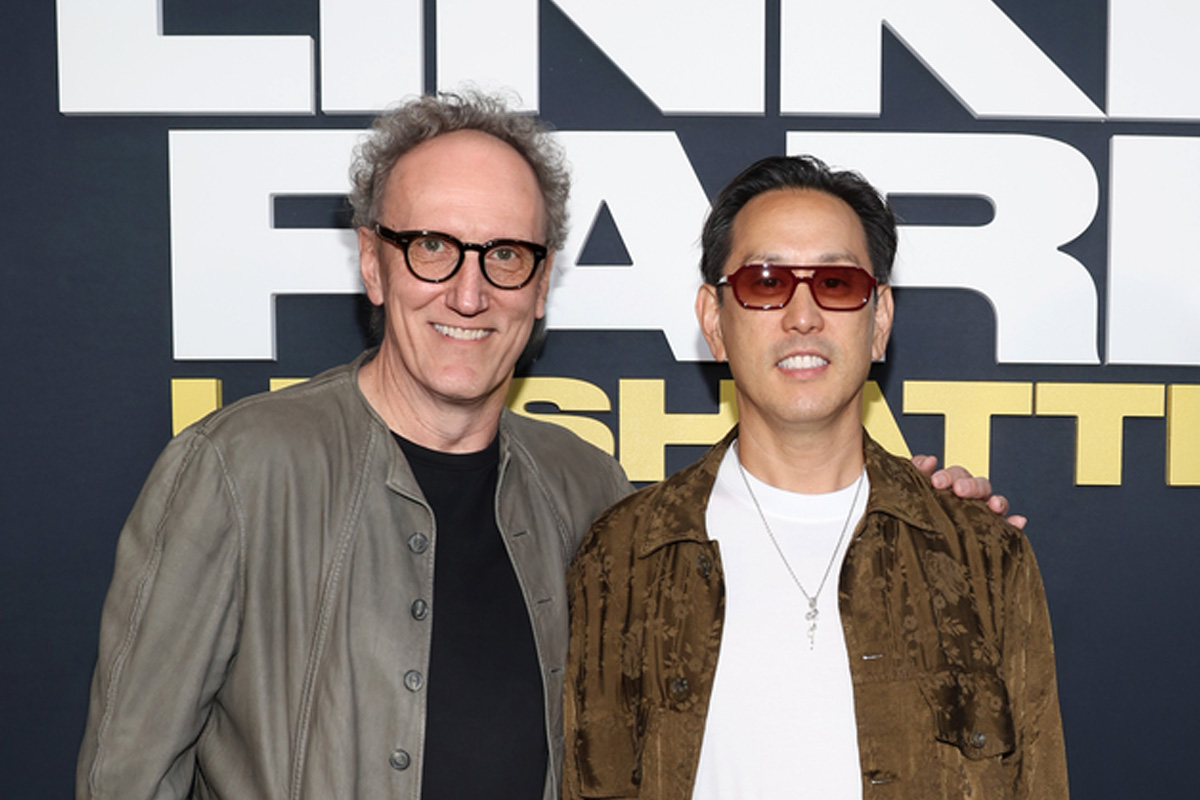
It’s a common assumption that documentaries come together in the editing suite. That’s where directors and editors collaborate on sculpting the basic building blocks of documentary storytelling, whether it’s talking head interviews, original or historic footage, animation, news clips, you name it. What often doesn’t come out of this process is a writing credit. But editor and filmmaker Igor Kovalik, working closely with director Joe Hahn of Linkin Park, has managed to change that script with his work on the new documentary film “Unshatter.”
In partnership with the band, with whom he’s had a long-running relationship, Igor is one of the first editors to get an on-screen writing credit for his work on the recently released Linkin Park documentary “Unshatter.” The film tracks the band’s coming back together years after the death of lead singer Chester Bennington. With a new album, a new tour and two new members, “Unshatter” uses studio sessions, live performances and interviews to convey a story of healing and reinvention.
Advertising people will know Igor from his notable career in TV commercial post production. He founded Beast Editorial back in the mid aughts and went on to grow it into the largest editorial companies in the country with offices in seven U.S. cities working on brands like Apple, BMW, and Nike. Later he shifted into more hands-on filmmaking, shaping projects from the very beginning – which describes his role in the making of “Unshatter.”
His work spans PBS documentaries, HBO series, Super Bowl spots and music videos with over 8 billion combined views, and he’s worked with everyone from the United Nations to the NFL, Oprah Winfrey, Michael Mann and Black Eyed Peas frontman will.i.am.
The Howler spoke with Igor about what went into the writing and editing of this new film and explored how serving as both writer and editor on projects like this can create a much deeper, more nuanced final product. Here’s what he had to tell us.
What’s your history with the band? How did you first get connected?
Igor Kovalik: In early 2007, Bill Boyd, the co-producer of “Unshatter” and a friend and client since the mid ‘90s, was producing the music videos for their “Minutes to Midnight” album, and he thought Joe Hahn and I would click, so he introduced us. The first video I edited was “What I’ve Done,” which was very edit intensive, weaving stock footage together with the band’s performance to tell the story. It ended up getting nominated for several awards. Joe and I hit it off right away, and we’ve been friends and collaborators ever since.
Describe the writing process for this project. Since documentaries are typically unscripted, what form did the writing contribution take?
Igor: “Unshatter” had a pretty unusual path. It started as a concert film. CJ 4DPLEX, the Korean company producing it, had arranged with Linkin Park to film their November 2024 show in São Paulo. The plan was a classic concert film: the full show from start to finish, with a little behind-the-scenes footage weaved throughout.
Once we got back to L.A., Joe and I kept talking about it, and we both felt concert films just weren’t as relevant as they used to be. Back in the day, most of us never got to see Led Zeppelin, or The Beatles live, so a concert film was your only way to experience those bands in concert. Now there are a hundred different smartphone angles of every concert available online within hours after a show ends. We wanted to make something more relevant.
And there was a bigger story sitting right there. The band had been gone for seven years, then came back with their September 2024 launch show and dropped a new singer and new music on the world. They’d been on a real journey from 2017 to 2024, but the fans had no idea what that looked like. We both saw a huge opportunity to tell that story: A story about four friends who came together, and through their friendship, their love of music, and their drive to create, found a way to heal and eventually put a band together. We knew this wasn’t going to be a film looking backwards at the band’s origin, which a lot of music docs are about.
As a filmmaker, Joe was really interested in telling a nuanced, in-depth story. Linkin Park puts out a lot of content on LPTV, on their YouTube channel, and it’s great: short, sweet, funny segments from on tour or behind the scenes that give you a peek behind the curtain. But it’s just a peek, and it’s meant to be fun. It doesn’t have the vulnerability or emotional depth we knew this film needed.
Once we decided what the story was, I started going through all their archival footage. Mark Fiore, a close friend of the band, has been documenting their journey from the very beginning, setting up cameras in studios every time they were together. I’d watch days and days of it, transcribing everything to find the story points.
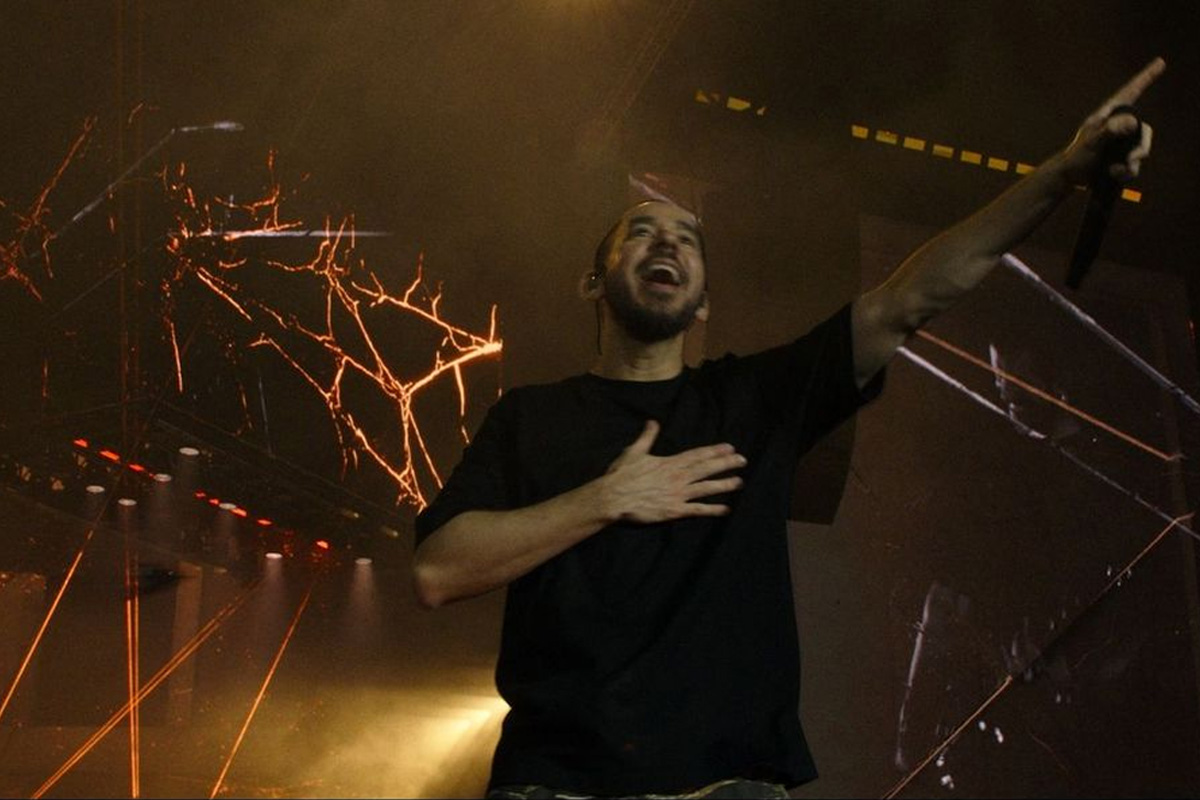
Photo courtesy of Linkin Park and CJ 4DPlex America, Inc.
We hadn’t done any interviews with the band at that point, so all I had were the transcriptions and the concert footage, which I felt would serve as an emotional thread running through the whole film. I also researched every interview they did post-launch, to get their basic story points.
From November ‘24 through the end of April, ‘25, I was mostly doing a paper edit. I roughed out some of the concert songs, assembled rough edits from the scenes I found in the archival footage and continued to shape the story on paper, sending Joe iterations along the way.
Once we had a structure Joe felt comfortable with, we shared it with the band. It was part film, part Power Point presentation. There were placeholder cards all over it that just said things like, ‘band talks about this here.’ We watched the whole thing, the lights came on, and there were a lot of questions. Joe and I talked them through the vision. Honestly, I was very nervous, because I knew how private they are. But to my surprise, they all bought in and got excited.
The next step was turning it into a real film, and that meant interviewing everyone individually. Honestly, I didn’t start cutting the film in earnest until May of 2025, six months in, once we had all the interviews. Going into those interviews already knowing the story points and having a sense of the structure from start to finish really helped us get the most out of those sessions. In hindsight, I don’t see another way of doing this.
Thankfully, CJ 4DPLEX was great about all of it. They could easily have said, ‘What are you guys doing?’ But once the band explained what we wanted to do, CJ got really excited. They saw it was going to be much more than a straight concert film. We spent the rest of 2025 cutting it.
Documentaries often come together in the editing room. As both writer and editor, how did that dual role help you shape the final version with director Joe Hahn?
Igor: It was crucial to the process. I don’t think this film would have been nearly as good if I hadn’t had the chance to sculpt it on paper first, to know in my mind what it was going to look like, and to have Joe’s buy-in along the way.
If you’re making a documentary about someone with a phenomenal career, you can sit them down, have them tell you their life story over a couple of days, cut it down, and backfill it with archival footage. A lot of celebrity docs, or docs celebrating someone’s life, are made that way. But that wasn’t our approach. We weren’t looking back historically. We were trying to show things as they happened in real time and have the band talk about what they felt and what they were going through in those moments. We were only looking back a couple of years at most, or in some cases a few months, so it was all still fresh in their minds. I could point to a specific conversation on a specific day and ask, ‘What was going on there? What was the motivation behind it? What came out of it?’
If we’d just interviewed them without doing the outline first, I can’t imagine the interviews would have gone nearly as deep. And in the edit, I would have gotten lost in the weeds, because without seeing which conversations took place and mapping out the structure, I wouldn’t have known what story points to look for. Doing all that homework first gave me those story points, and that was incredible.
I can’t advocate enough for planning ahead: doing paper edits, doing your homework, and knowing what the story is going to look like before you sit down for an interview. A lot of times you only get one crack at an interview, so you want to make sure you’ve covered everything.
Describe your collaborative process when working on the film. How involved, if at all, were the members of the band? How closely did you work with Joe Hahn?
Igor: Throughout the cutting stage, I was constantly running things by him. He doesn’t live too far from me, so he’d come over to my studio, we’d watch the film together and talk it through, or I’d show him bits and pieces as I went. He was involved the whole way.
Once we got to a cut we were happy with, we started showing it around, and everybody had comments. Brad Delson, lead guitarist, and Mike Shinoda, vocals and rhythm guitar, were especially involved, and there was a lot of back and forth. It was important to them that I got the story and timeline right. Then once we got to the mixing stage, Mike was there virtually every single day, and the full band came in a couple of times to listen and make technical suggestions. Obviously, the way the film sounded was very important to them. So yes, they were very involved throughout the whole process. I must stress though that at no point did they try to affect my editorial decisions. They were totally fine to tell the story, warts and all. Honestly, I find it incredible how much trust they gave me, given how huge they are.
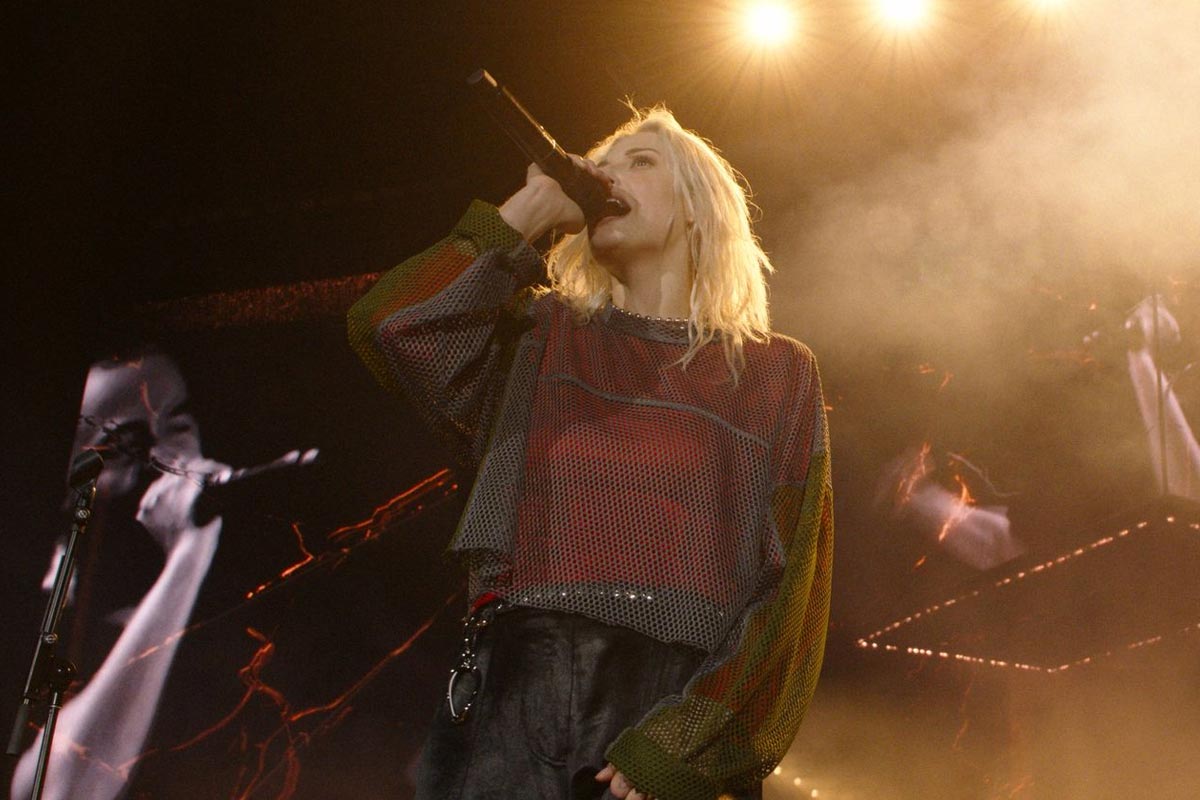
Photo courtesy of Linkin Park and CJ 4DPlex America, Inc.
Tell us how you ended up with the on-screen writing credit. As an editor, what did it mean for you to have such a visible and tangible form of acknowledgment?
Igor: I raised it with Joe, and he and the band were fine with it. And it meant a lot. I think documentary editors get shortchanged so often. They’re instrumental in shaping the film, as any doc editor will tell you, but they’re seldom recognized with a writing credit. I’m grateful to Linkin Park for giving me that credit as recognition for the work I did. It really matters, and I hope more editors get writing credits on the films they help shape.
This project unfolded over an extended period that required lots of soul-searching on the part of the band, along with extensive logistical challenges. What was it like being part of this process?
Igor: The biggest logistical hurdle was that the band was out on a major world tour the whole time I was cutting. On one hand, that was great, because it gave me a lot of time to sort things out without too much pressure. On the other hand, they weren’t always available to give feedback when I needed it.
Luckily, my co-editor Eric Weimer was around. He worked out of my studio in L.A. for a while and then remotely from Detroit, so we had each other to bounce things off of. That really helped, because when you’re working by yourself, you can go down a creative rabbit hole. It’s nice to have someone you can turn to and ask, ‘Am I crazy? Is this working?’ And to have somebody to challenge some of your creative decisions. I would also lean on other editor colleagues I respected, and show them rough cuts to get their honest take.
You can’t overstate the importance of being in a room with other creatives and talking ideas through. Whenever the band had gaps in their tour, I made sure I was ready to make the most of that time and get their input, especially Joe’s. In the end, it all worked out.
You’ve had a long career as a TV commercial editor. What skills from that discipline did you carry over to your work on “Unshatter”? How did this project compare with editing a high-profile ad campaign?
Igor: Everything I’ve done up until now helped prepare me for this moment. I’ve cut a lot of music videos, a lot of music-based ad campaigns, and a lot of dialogue-driven stories. Even though the medium is different, it all comes down to finding the best way to tell the most impactful story in whatever medium in which you’re working.
Compared to cutting a high-profile ad campaign, in many ways this was easier. Not the work itself, but the process. This may ruffle some feathers, but anytime an editor can be in the room with the stakeholders and the creative decisionmakers, everything goes smoother. You get direct feedback, you can pivot and address the real concerns and get to the heart of why you’re being asked to change something. The more intermediaries there are between you and the final decision makers, the worse the process gets. Any editor will tell you we’ve all worked on campaigns with so many layers that by the time the work reaches the people who matter, it’s been watered down and far from what it could have been. We just sit there shaking our heads, thinking, if only they could have seen the original cut.
In this case, having Joe as both director and a member of the band was so important. First, he was my conduit to the band and kept everyone on track and seeing the same vision. Second, Joe and the band kept the suits away. I don’t mean that in a disparaging way at all. In fact, I have nothing but compliments for CJ. We delivered something they didn’t ask for, arguably something much better, but there was probably a point where they were scratching their heads, wondering why we weren’t showing them a rough cut of a concert film that should have been doable in the original 20-week schedule. Their respect for the band, and my direct access to the band, is what allowed this to happen.
There’s no universe where this film gets made if I’d had to go through a bunch of layers. At some point, someone would have said, ‘Hey, you’re supposed to be making a concert film. Go cut a concert film, or we’ll find someone who will.’ Because of how this came together, that never happened.
Now that it’s out, what’s next for you in terms of your relationship with Linkin Park, and what other notable projects are you working on?
Igor: The band is in the studio right now working on an album and probably won’t go back out on tour until 2027 or 2028. But I’m still involved with them. Through the process of making this film, my relationship with the band has evolved. I started directing some of their livestreams on tour, and I’ve kind of taken on a role as a film and broadcast producer/creative collaborator. I’m not sure what the title is, and it doesn’t really matter. The band wants to give their fans not only the best music they can make, but also the best concert experience, and the best visual experience for anyone streaming their shows or sitting in the audience.
For example, on their recent “America’s Got Talent” final appearance, I was there acting as the creative liaison between the band and the AGT broadcast team. Even though they’re off the road for now, they’re already talking about what the next tour cycle will look like visually, and I’m in the room for those discussions. We’ll see what that looks like.
As for documentary work, making this film, and taking ownership of the producing and writing side, reminded me how much I miss shaping the environment I work in. I’ve started multiple companies, and after I left Beast and COVID hit, I think, like a lot of editors, I was wondering what was next. The industry was changing, and we were taking whatever work we could get. I didn’t like that feeling. This film reminded me how much I enjoy being proactive.
As an editor, you have an awesome toolbox: you can take anything, even material you find online, and shape it into a story. We’ve all done ‘ripomatics,’ and now with AI tools, there’s even more editors can do. I’ll always rely on that skillset to help shape whatever I work on. However, at this stage in my career, it’s important to me that I’m part of the team that originates the creative from the outset, so I’m developing a couple of documentary ideas with some partners, and we’ll see where that goes.