



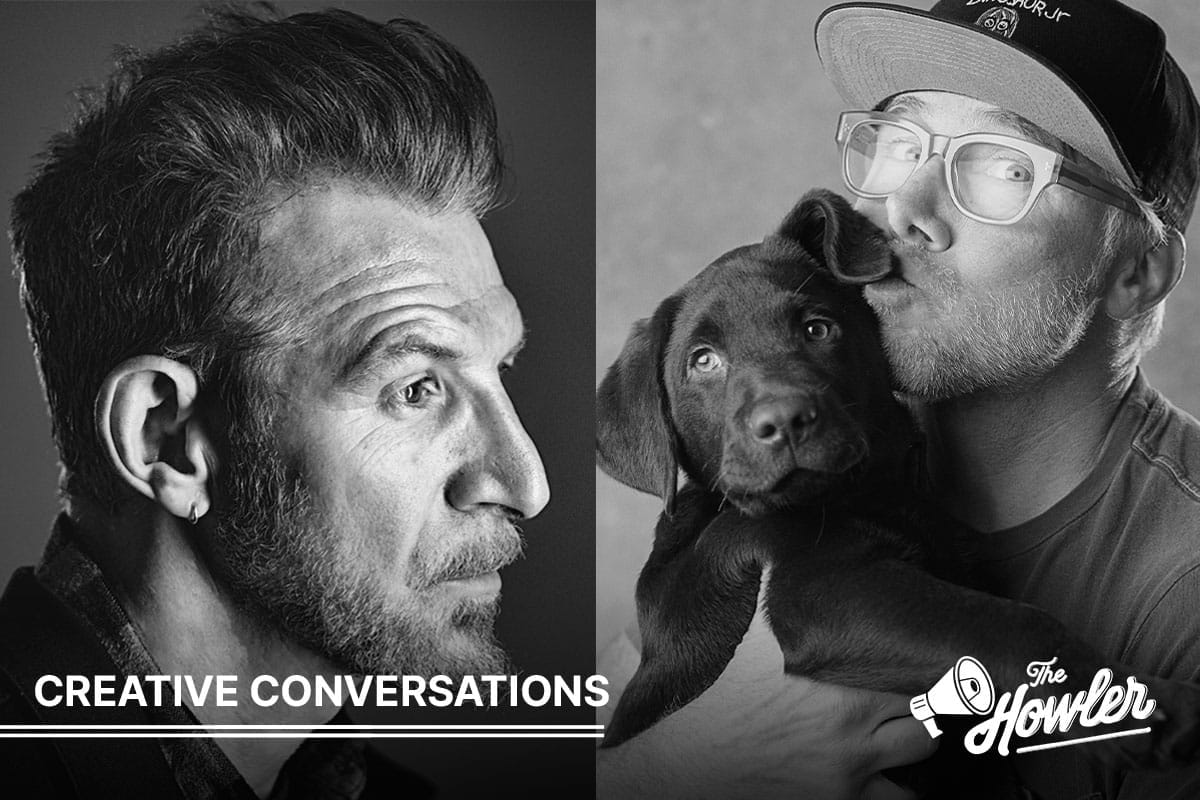
Welcome to The Howler’s Creative Conversations, our new editorial feature that pairs creative people from the agency, production, post production and music & sound ranks with their peers to talk about – what else? – the creative process.
Our first installment of Creative Conversations features two acclaimed talents who’ve worked together on a number of projects going back for many years: that would be FANCY Director MAPP, aka Steve Mapp (that’s him with the puppy above), and Peligro Music + Sound Composer/Creative Director Greg Kuehn. The duo first collaborated when MAPP was an art director at the San Francisco office of Leagas Delaney. The client was adidas, and the project promoted BMX star and ESPN’s X-Games athlete Dave Mirra. While the work itself is more or less forgotten, for MAPP, the experience made an indelible impression.
“We had to get the work out the door right away, so I flew to L.A. and met Greg for the first time,” MAPP recalls. “I realized very quickly that he has as eclectic a taste in music as I did. I’d drop a reference, and he understood what it was, and he’d mention stuff, and I understood what he was referring to. We just had a lot of fun and hit it off.”
Greg says the ability for the two of them to work face-to-face helped establish their creative process. “We jammed out, and it was really cool, because I love doing that,” he explains. “To this day, I want people to come over and do it in person, because you save so much time and you get right to the point. It’s not always convenient, and the tools today are much better for collaborating remotely, but what Steve and I did was great. We bonded on that stuff, it was just immediate, this real-time composing with him sitting there as a creative who had a really good vision for the work.”
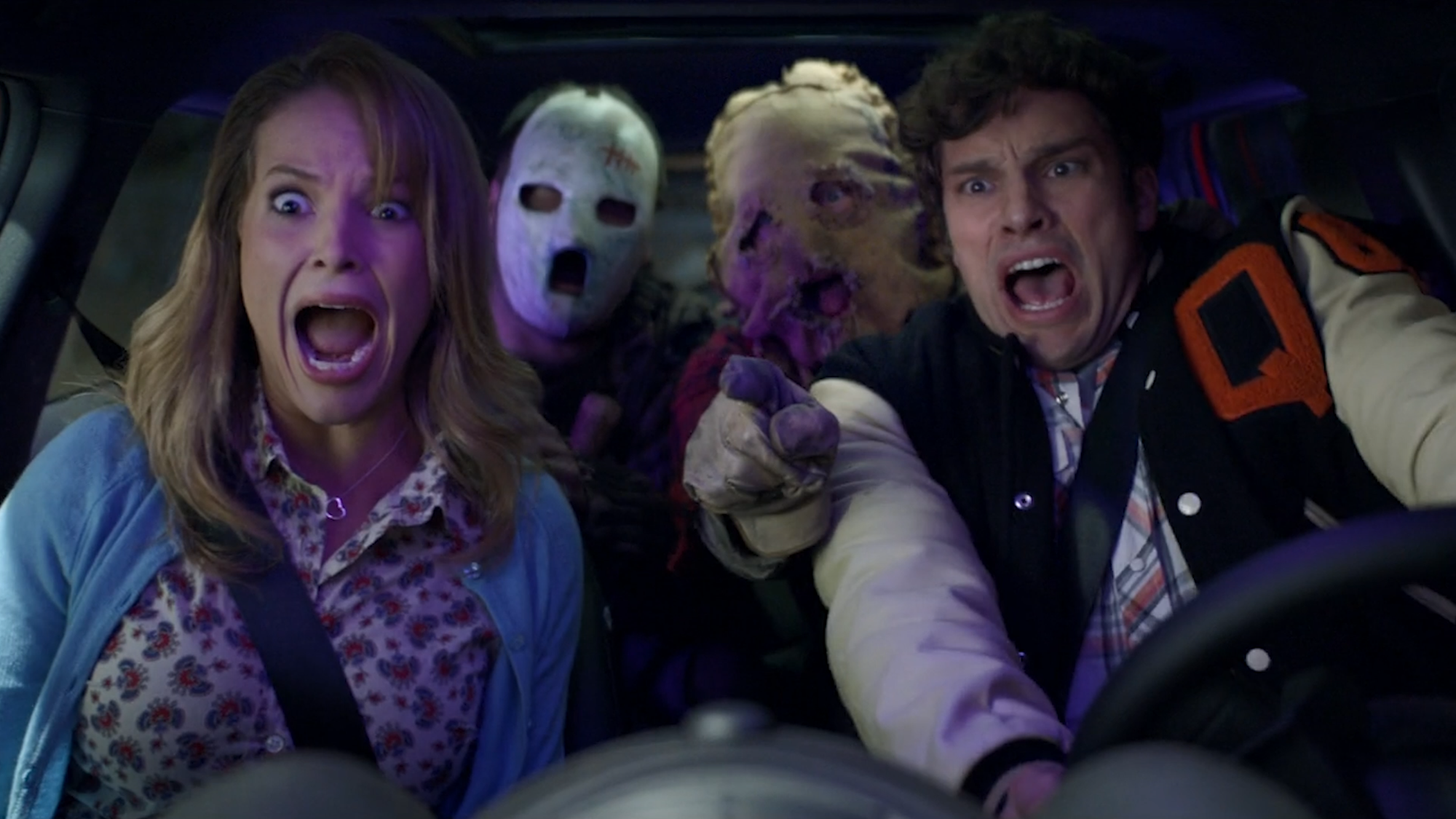
That set the tone for many collaborations that followed. Greg went on to provide the music for MAPP’s first directorial effort – a short comedy safety commercial for MINI Cooper shot like a horror film (embedded right below). MAPP says what helped drive the visual gags was the orchestral horror score Greg composed. “Greg channeled his inner John Williams on this,” he recalls.

Since then, they’ve shared projects, stories, musical inspiration and a creative connection that goes deeper than you’d expect between a director and a composer. Here’s what they had to say in their Creative Conversation:
The Howler: MAPP, what role does the music and sound play in helping achieve your vision for a script? What role does Greg play in making your work better? And Greg, vice versa?
MAPP: Well, it certainly helps set the tone as much as the edit itself, and it especially helps the pacing. Comedy is about timing and allowing moments to land. There are certainly things you can do with tracks to accentuate points and give air for moments to play, and Greg does that. It can also slow down the pacing. Sometimes a slower, more breathable track helps. If you have a more frenetic pace, it makes things feel a little more manic. You can use those to your advantage, and Greg has all the tools to do that.
Greg: A lot of it’s just the collaboration. I mean, you’ve got to listen. Steve and I have been friends for a long time. With comedy, we have a similarly quirky sense of humor, musically speaking. I know what he likes, and we talk about it a lot – we just really think about what would be fun and funny or different.
And I always try to remember that I’m the last writer on a project. You write a script, you shoot it and edit it, and then I get to help shape it. It’s the last chance to make this pop more, make it funnier, or make it weirder. And Steve's a great collaborator for that stuff, since I usually know where he's coming from.
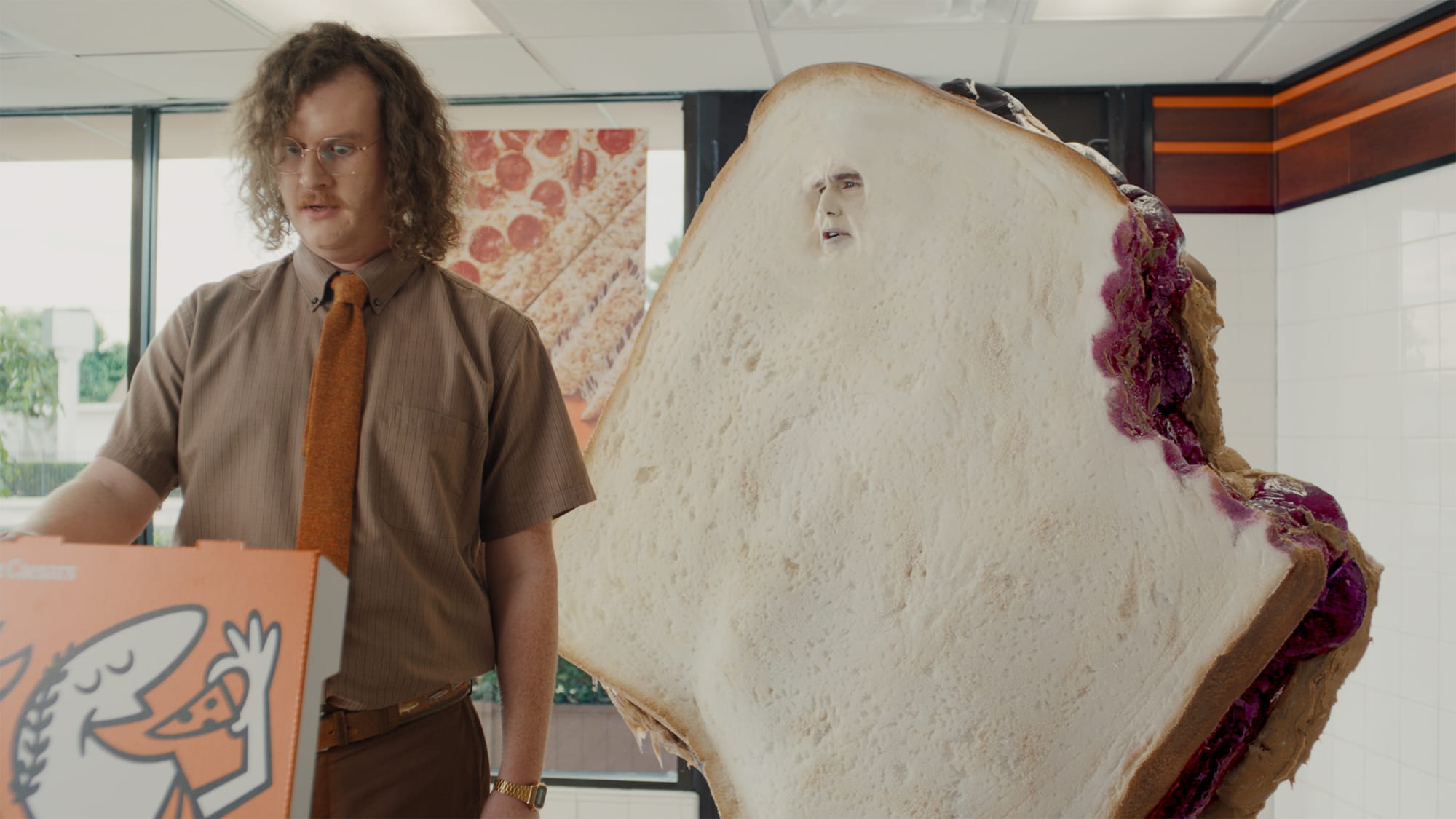
MAPP: I like to think of the music as another way to paint the picture. Obviously we’re painting with visuals, but we set the tone, the mood and the feel as much with the music, too – you know, like if you’ve got a peanut butter & jelly sandwich breaking up with his previous lover (“Little Caesars Greatest Combination,” embedded right below) . It’s a love scene you’re capturing, and Greg did that one really well. It was just this moment that kind of sits and breathes with awkwardness.
How much influence do you have on Greg being tapped to do the music for projects you direct?
MAPP: I don’t always have the most pull, but I do have my conniving ways of weaseling him in when appropriate. The best way I’ve found is to get him in early. One way that’s a little risky, because it’s a bit of a gamble, is to get a rough cut with some of Greg’s music on it. Because as we all know, if you’ve sat in an edit before, nothing’s as powerful as demo love on a music track.
And Greg’s a great collaborator, too. Sometimes we have a temp track that’s not completely working, and he’s really good at reworking it and giving it his own flair. And if we’re not sure of what we’re doing, he’ll come back with lots of suggestions. He also has a vast library of stuff, so it’s always valuable to browse that and see what you can find, either as a source of inspiration or sometimes as a piece that works really well.
Greg: It can be a good starting point, whether you’ve got a piece of music that might just fit or it’s something you’ve worked on together before that had a cool vibe. You can always go back and modify things, but at least it’s good to get that first little nugget.
How do you describe your creative simpatico? What do you like best about working with each other?
MAPP: Good question. I really like working with Greg because he’s a musician, he’s not an ad music guy. He comes from a music background, he’s in T.S.O.L., a punk band, but he also plays piano beautifully. And that can make just digging into a project a lot of fun.
I’ve directed some non-comedy work for U.S. Bank, and Greg reluctantly gave us a beautiful piano piece (embedded below) that he’d been writing for himself. We put it against picture, and it worked really nicely. I don’t think that was his intention for the piece, but when we laid it against the film, with Jake Gyllenhaal’s voiceover, it just came together.
He also puts up with me too, because I don’t actually play music, I just claim to know a lot about it, and I have a lot of different inputs, so sometimes when I’m describing what I want, he humors me and nods along, and then does something completely different to prove me wrong. But we’ve got a good relationship that way.
Greg: We have a long track record, so there’s not a lot of second-guessing. We really talk from the hip, and just be real about stuff, and there’s no kind of worry in that way – it’s like old pals figuring out what works.
And just the loyalty too, man, I really appreciate that. Because people come and go, and when you have a longstanding relationship with somebody, it’s really cool, and he always makes an effort to get me in on stuff, and it’s not something I expect. It doesn’t happen all the time, but when it does, I’m grateful for it. It’s nice to have sort of a long-term creative relationship with someone who you like and who has similar interests and tastes, and you just have a good shorthand.
MAPP: I’ve been thinking a lot about how music and sound plays such a role in film and commercials, and we’ve often talked about it. What’s more powerful, a really great track against mediocre footage, or stunning, beautiful footage with a mediocre track? As much as it pains me to say, I think a great music track over mediocre footage really does win.
But what’s great is when you get them both and they work together. When you get the right track on something, the hair rises on your arm, you get that feeling like you know you’ve hit it. And you look back at all the great classic commercials from over the years, you can imagine those directors and those composers or music supervisors probably got the same feeling. Like the Nicolai Fuglsig Sony Bravia “Bouncy Balls” spot. It had that Jose Gonzalez track, “Heartbeats,” which was actually a cover song by The Knife. It was just that beautiful guitar and his singing against that picture. Everyone watched it and was like, wow, this just stopped.
Another that comes to mind was the VW “Pink Moon” spot, directed by Jonathan Dayton and Valerie Faris, with the song by Nick Drake. Again, music is so important in telling the story, and when it all works together, it’s really powerful.
Greg: It’s about trying to find the emotional center of stuff. For Steve’s U.S. Bank campaign, I remember they tried a couple different things in there for temp, and sometimes it’s all cool music, but if it doesn’t hit the right emotional level, then it doesn’t work. And Steve is good at this – we fight for emotion. Sometimes the music can have all the right sounds, but if it doesn’t have the right melody or it doesn’t make you feel anything, it’s not good enough. A lot of times people don’t realize that until they hear it.
You need something that really touches the emotion of what’s on screen. That’s what I’m trying to do; I really believe in the emotion of music. It’s not just the sounds. When I’m working on it, you can feel this connection. And Steve’s great at advocating for good work. He’ll say, ‘this is so much better, this works better.’
Greg, when you work with younger creative people, what do you impart to them? What wisdom do you share?
Greg: I don’t look at it in that way. I mean, if there’s an opportunity to advise or whatever, I’ll take it. I don't think that because I’m older, I’m gonna come with all the answers or whatever. I defer to the creatives because it’s their baby. If Steve’s directing something, this is his vision; I’m just trying to help that.
I work with young creatives and directors, and you see times when they may be a little green in certain areas, but I just say, let’s get on a level playing field. Let’s figure out where we are with each other. It’s not like I’m the senior person here, I’m gonna show you how this works, kid. I take people as they are, and I just want to help make things better, no matter what.
MAPP: Yeah, talking about the age thing, oftentimes people will say this is a young person’s industry, but I think you just have to be good. You gotta be nice. You gotta be hardworking. There are younger directors and there are older, but I’ll outwork most other directors in the business. I’ll put my heart into it. And that’s what Greg does, and it’s why he stays so busy.
Greg: I just love when you get to that place where you’re engaging with somebody and just figuring out what the shared vision is and understanding it. If I ever get bummed when I get requests for revisions, and I think the piece is perfect, well, I just didn’t have enough information. I never try to get all pissy about it. You can’t, cause it’s really a collaborative effort, no matter what.
And with young creators, there’s a lot of enthusiasm, there’s a lot of direction. Our goal is how are we gonna make this thing great? And if you can do that, it’s cool, because all of a sudden you have this bond and you’re able to get on the same page creatively. And that has to happen or it’s not gonna be successful.

MAPP: This touches on something we didn’t talk about, and that’s trust. Often as a director I’m not sitting through the whole edit as much as I’d like. Sure, I wedge my way in as awkwardly and uncomfortably as possible, but at some point I have to hand it off, and the same comes to music for a track, too. Once they’re working with Greg, I trust it’s in good hands and it’s not gonna go awry. I say to myself, ‘Don’t f— it up, Greg!’
What I also like is that with Greg, there’s no ego and he’s not precious about stuff. And he’s great at getting younger creatives to express what they want, even if they might not have the tools to explain exactly how. He’s really good at understanding and getting to the bottom while keeping it fun and collaborative. I’ve often heard back from creatives who worked on another project and they brought Greg back in, and it’s like ‘that’s great. I helped them make a great connection there.’ So it’s always good.
The industry is changing rapidly, some ways good, others less so. What do you see as the greatest opportunities in the future? And the greatest challenges?
Greg: It’s always the same, man: it’s just about good creative and good people. That’s the goal. You can sit around and be scared about it and say, ‘Oh my God, with AI and the disc licensing tracks and all this stuff,’ and who knows where that's all going. And to worry about it is futile.
All I know is that Steve and I keep getting opportunities to work together. And I have very low expectations of anything, because for me, expectations usually lead to some sort of unhappiness. So, I’m just grateful. It’s all a win. If Steve calls up and says, ‘Oh, cool, we’re going to work together on this thing,’ that’s great.
Plus I’m really bad at figuring out what’s going to happen, so I don't bother. Most of the time, people’s negative prognostications are wrong. You can sit around and fret about it. But there’s always going to be somebody who makes the time and money available for good creative, and there’s always going to be somebody who's doing it on the cheap and doesn't care. We find our little niches, those little opportunities where we get to do cool stuff with cool people like Steve, and that’s usually enough.