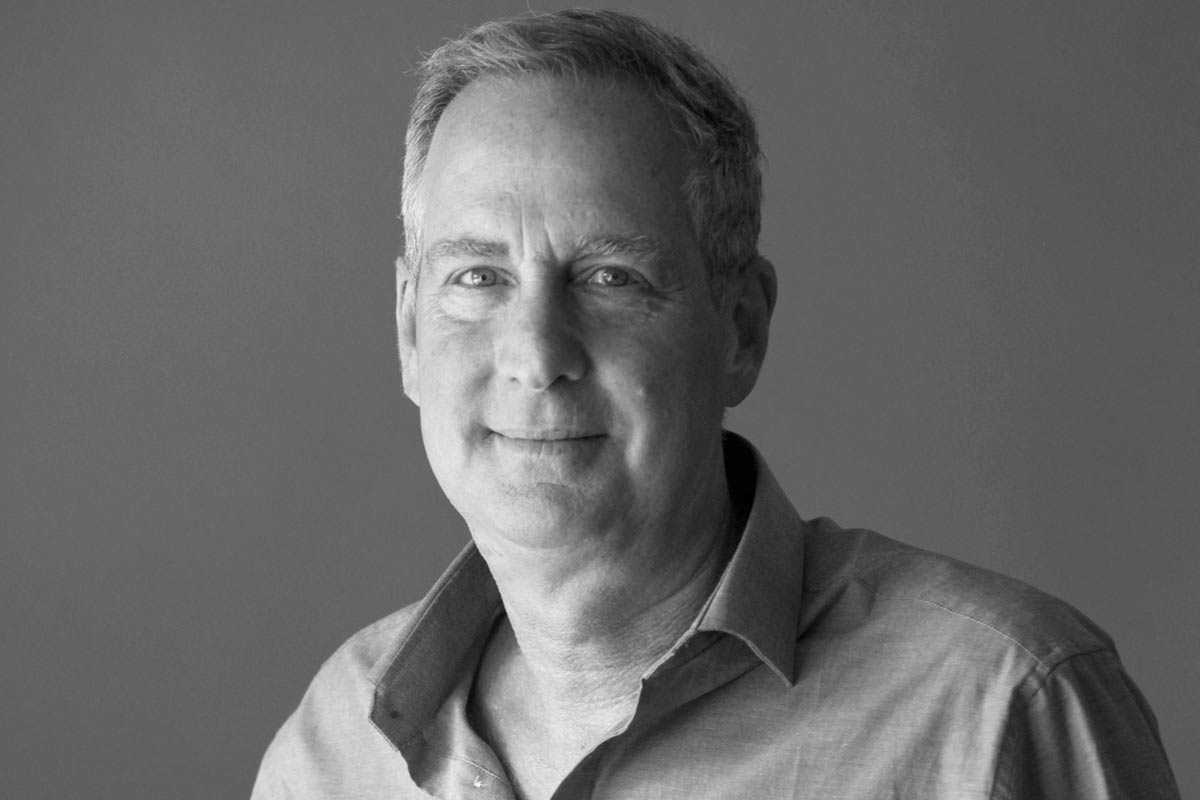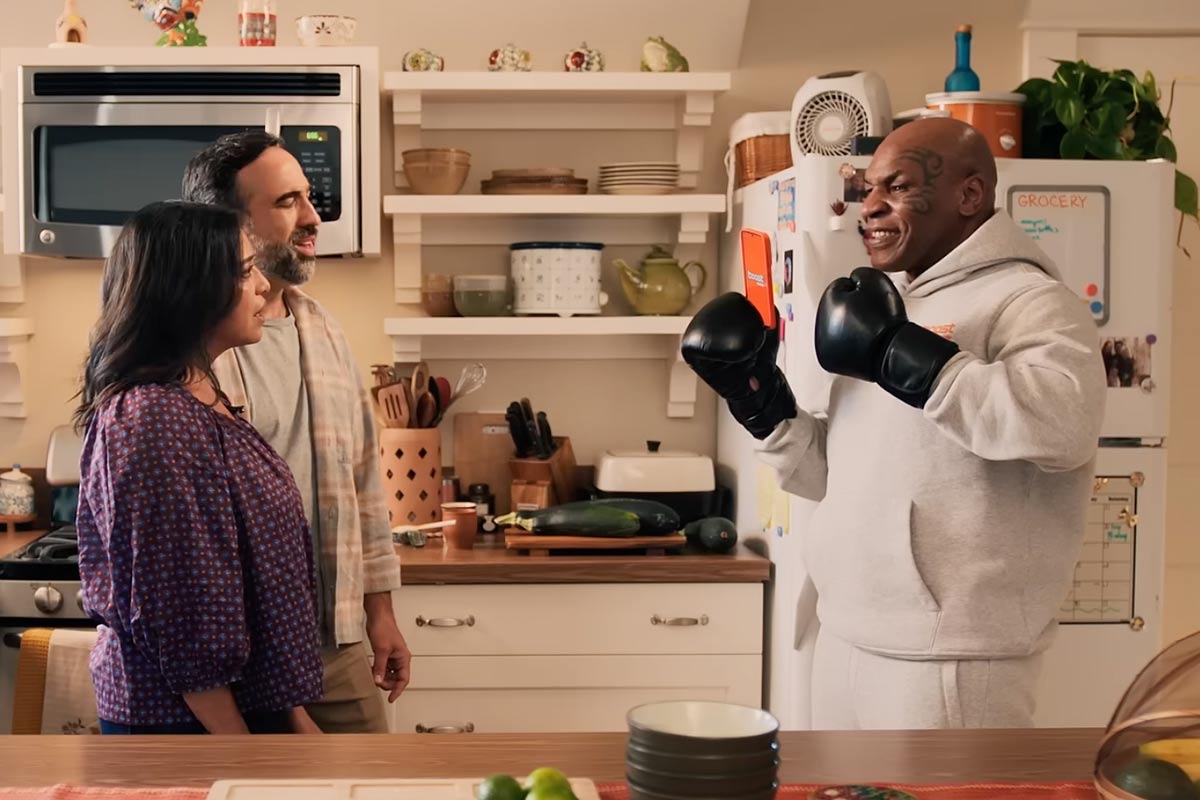




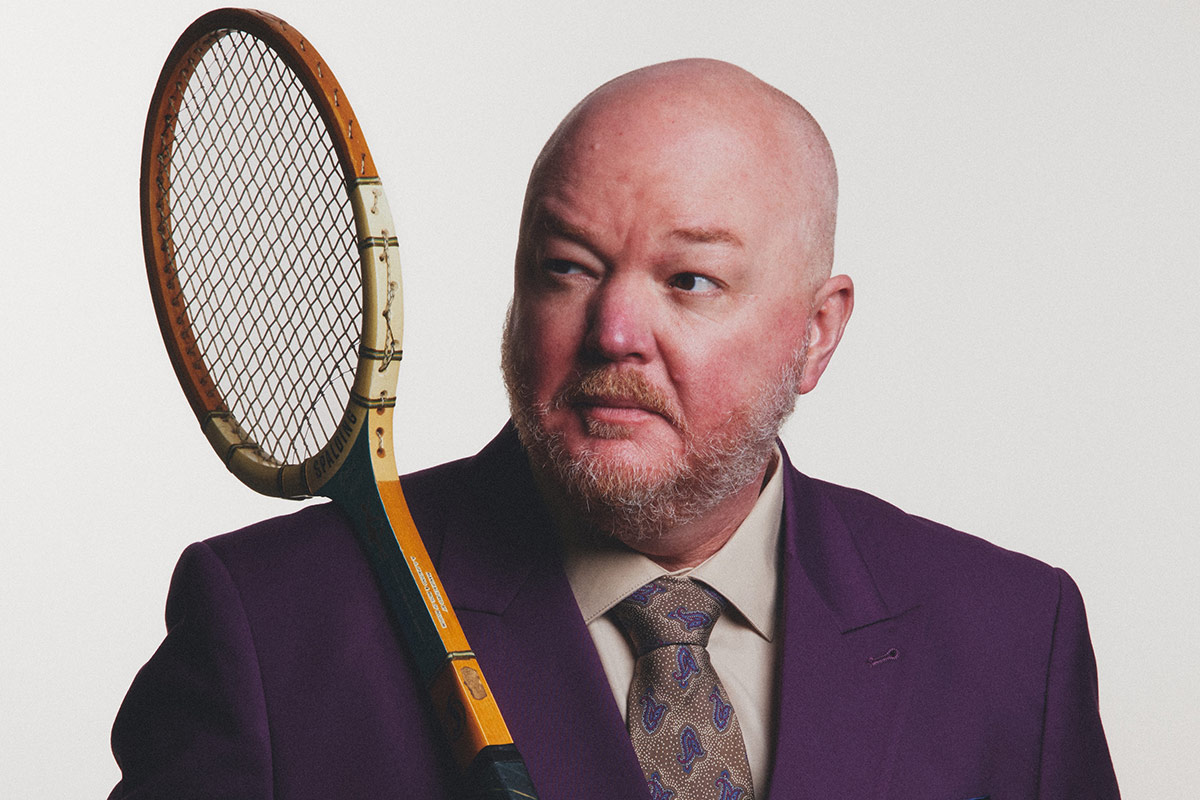
"If I haven't done it yet, that's what I want to do next" may seem like a broad motto, but when your portfolio includes playing music via Terry Crews' muscles, like it does for CALLEN's Head of Production, Mike Davidson, the implications of such a mantra become a lot stronger.
Mike's foray into adland was similarly unusual. After graduating with a bachelor’s in journalism from Texas A&M, he spent the first nine years of his career in on the account side at agencies like The Richards Group, JWT Chicago and Energy BBDO, and even put in a stint with the NBA’s Houston Rockets, before finally cutting his teeth on production after a few months at Goodby, Silverstein & Partners.
From there his focus stayed with production – spending almost eight years with Wieden+Kennedy before finally securing Head of Production posts at Leo Burnett, Monks, PXP and finally CALLEN, where he remains today.
Having spent 20-plus years in the industry, he's won awards for doing everything from launching a KFC sandwich into outer space, to preventing the apocalypse through an Old Spice video game. (We suggest not sweating the details too much.) Given his motto, his compilation of prior work and the interview you’re about to read, it’s a safe bet he’s already up to something even more outlandish.
Where did your career begin, and what made you decide that advertising was where you wanted to make a name for yourself?
Mike Davidson: I sort of fell into advertising, accidentally a bit. I studied journalism in school and had my sights set on sports reporting, but, as I got closer to my degree, it became clear that you don’t just walk in day one of your career and get sent to cover the Super Bowl. It is quite a long, grueling road to any kind of success in that world. So, an academic advisor recommended I take a couple of advertising classes, applying those same interests in writing and creativity. That led to an internship at an agency that gave me both a great learning experience and my first taste of a fast-paced, energetic, creative environment. Plus, I learned about happy hours and agency softball teams. From there, I was hooked. I finished up school and got my first high-powered job as an Assistant Account Executive Trainee.
What made you want to join CALLEN in the first place? What lessons or practices did you bring from your prior experience at other agencies to your current position?
Mike: After leaving W+K, I drifted for a handful of years inside of bigger holding company agencies and had gotten myself really far away from what I loved about production, what I was good at, and what I actually wanted to spend my days doing. CALLEN presented me with an opportunity to get back to all of those things, and to do it with people I respect, love working with who, most importantly, need me to do what I do best.
I’ve taken lessons learned from every stop in my career, and I’m grateful for each experience as they’ve shaped me into who I am as a leader and what I value most in my career. Independence is everything, baby.
What do you like most about being at the agency? The people? The clients? The way they don’t take themselves too seriously?
Mike: Do you follow our agency’s Instagram? It does a better job of answering this question than I can with words. But seriously, I joined this crew about a year and a half ago because of all the things I said previously. But mostly, the people. Every person at CALLEN is at this magical intersection of being absolutely brilliant and also able to make fun of themselves for it. I’m thankful I get to sit at their table.
You got your start on the account side, then transitioned to production, which is a bit unusual. How did you make the switch? What brought on this career pivot?
Mike: I got my start on the account side because it was the best path for me to get my foot in the door and learn the business. I didn’t have any specific graduate degree, and I barely knew all the roles that made up an agency. But, as I grew into a very mediocre (probably being generous) Account Manager, I developed a sharper understanding and appreciation for all the different disciplines, from strategy to creative to production, working in close collaboration with all of them. And that gave me a better understanding of what part of the process I was most interested in, which was the making of the work, and, truthfully, what aspects I wasn’t as passionate about: the professional business stuff.
When I got to GS&P in 2007, it was right at the forefront of the digital production boom, and we were selling a ton of interactive ideas – big campaign websites, branded apps, ridiculously elaborate rich media banners. What a time it was. The agency was one of the first to build out a dedicated producer group for it all. But, in the early days, there was almost more work than there were producers to produce it…which turned out to be the most fortunate thing for me in my career. Still, in my Account Supervisor seat, I took any opportunity I could to help build out a production schedule, to call a vendor, to Q/A some assets, whatever was needed. Once I got going, I knew production was where I belonged. Thankfully, the Head of Production at the time, Mike Geiger, and agency leadership agreed and supported me transitioning into a producer role. Huge shout outs as well to Carey Head and Derek Richmond, my EPs at the time, for advocating for me and throwing me straight into the fire.
Beyond the straightforward fact that budgets and deadlines are ever-shrinking, how do you feel the ad industry has changed over the past few years? How have you had to adapt? What have been the greatest challenges in keeping up with the times?
Mike: If you went back in a time machine and asked the same question to someone in advertising in every decade since it began, I’d bet they’d all say the push for faster, better, cheaper was the greatest challenge. They’d be right, of course, but in addition to that, today we’re in a world of endless possibilities of what could be a meaningful brand experience for a consumer. It’s nuts to think there was a time when a client chose radio, print, or film. That was it. Now, it can literally be anything, and that should excite us all. The challenge today is understanding the environments where the consumer would care about that brand, behaving authentically in those moments, being an additive and purposeful element and not an annoyance or worse. (I see you, World Cup hydration breaks, brought to you by Powerade…)
What are CALLEN’s current in-house capabilities? And how do you balance between handling work in-house and going outside to independent production and post vendors?
Mike: We have design capabilities within our CALLEN Studio, led by our amazing Head of Art, Renan Molin. Brand design, product and retail design, campaign design…we can deliver it all with our in-house group. All other capabilities we source with external partners anywhere and everywhere, based on the needs of the job, what’s best for the work and the creative output on behalf of our clients. We’re focused on gaining opportunities and growing relationships by making the best possible work that works for our clients’ business. Things may evolve over time, but, for today, it really is that simple.
Practically an obligatory question: Where does CALLEN stand with AI? Is it a stupid-smart integration to your workflow? Have you and your teams invested many resources into the tech? How would you describe how the agency utilizes it now?
Mike: We’re definitely getting smarter about AI, but we’re using it to amplify how we work and what makes us, us. Faster research and ballparking, better comping and pre-viz and proof of concepts, filling out pictures to give depth and scale in post, etc. All in service to tight strategies, very human ideas, and handcrafted storytelling and execution – not to replace any of it.
What are some recent projects your department has handled that stand out? What were the particular challenges and hurdles you're especially proud of overcoming?
Mike: We did a fun one recently with our wonderful clients at Sandisk called “Memory Man”. It was a really interesting content creation experiment where we built a brand character, a functioning robot that was equipped with multiple high-definition cameras and most importantly, Sandisk Creator Phone SSDs for content storage.
We then gave “Memory Man” to three different content creators and told them to go nuts with it. The creators wrote, directed, and produced all their own unique experiences using “Memory Man,” with the robot actually capturing the creative process and demonstrating the product’s value to the creator community. The creators filled their channels with their content and we also had a crew shooting around the productions to capture their making-of’s with the robot for our brand channels. It was all a very meta, Inception-ish production we brought to life with 1stAveMachine and the wizards at SCPS.
Over this past holiday season, we helped our friends at Disney+ promote the 35th anniversary of “Home Alone” by bringing the fictional pizza restaurant Little Nero’s to life for fans of the film. Working with the experiential pros at Bednark, we partnered with Prince Street Pizza in L.A., Chicago, and Toronto, full transforming locations into classic 90’s style pizzerias full of authentic “Home Alone” details like Lovely Cheese Pizzas on the menu, the iconic red delivery car parked out front and John Candy’s polka band, the Kenosha Kickers performing.
And, most recently, we helped our Olipop clients launch their “feel good soda” redesign with a fun new spot called “A Good Start”. Brought to life with director Freddie Powell of Drool, animation with Not to Scale, and VFX with Untold, the story blends choreographed live action, an animated world and a reimagining of the classic song ‘Lollipop’ to convey the brand’s energy, optimism, and benefits. So many moving parts with this production; any of them getting off track could have pulled the whole thing under, but it was a total collaborative effort and I think it shows in the final piece. [For more on this project, check out The Howler's Q&A here.]
Judging by the CALLEN website... surely we can trust you're planning on finally adding the Larry O’Brien trophy to its awards list, right? Fingers crossed?
Mike: I've had two shots at the Larry in my career. I worked in the marketing department of the Houston Rockets early on, and then I got to work on the NBA account at Goodby. Didn’t win the trophy at either. I think it’s time.