Station Film’s Brendan Gibbons & Steve Orent on Earned Trust and Bringing the Funny
By Chandler Atton & Anthony Vagnoni
When you talk about long-running comedy teams, you’ve got to include The Brendan & Steve Show. Never heard of it? Well, if you’ve hired Brendan Gibbons to direct one of your comedy commercials, then you’ve likely had a front row seat to one of advertising’s most enduring partnerships of mirth
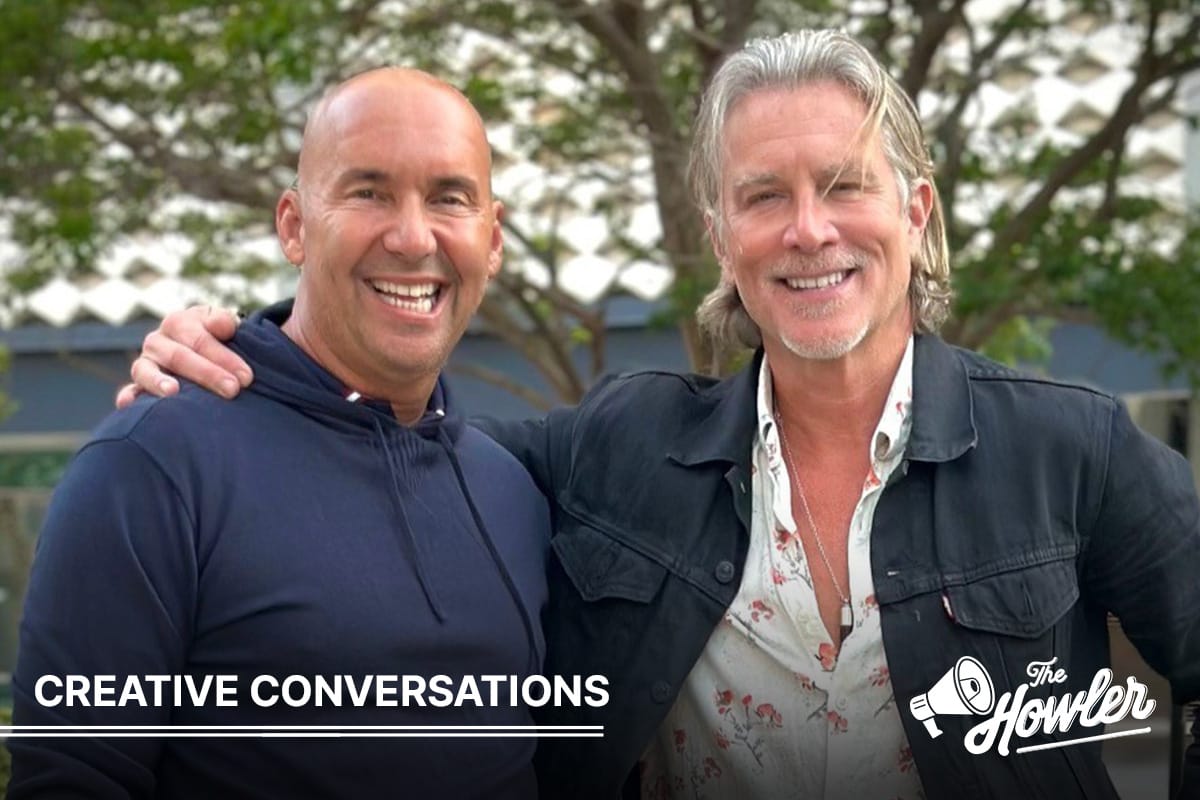
That’s because Brendan and Steve Orent have been working together since the former left his copywriting job at Ogilvy to step behind the lens and start directing genuinely hilarious TV commercials. The Steve, of course, is none other than Stephen Orent, co-founder of Station Film and, before that, EP and Founding Partner at hungryman, where Brendan landed after walking away from his agency career to direct full time. They’re the subjects of our latest Creative Conversations forum.
In the 20-plus years since then, Steve and Brendan – supported by a vast team of agency creatives and producers, clients, crew, actors and just about anyone else involved in making a TV spot – have collaborated on hundreds of ads. While Brendan may be best known for his work on Arnold Worldwide’s Progressive campaign, which he’s been directing for the past 14 years, his comedy work is far flung and notable, ranging from breakthrough spots for the Tribeca Film Festival and CNN to laugh riots for Avocados from Mexico, Applegate Farms, McDonald’s and many more. He even makes a cameo appearance in this pointedly funny send-off to 2020 from Public, Inc.
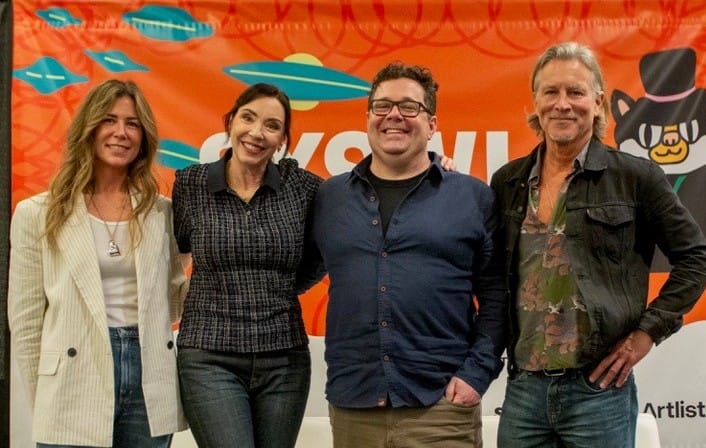
Recently, Brendan appeared on a panel titled “Keep Calm & Flo On: Keeping an Enduring Icon Fresh & Funny,” which ran at SXSW in mid-March. The star, of course, was Flo herself, the actress Stephanie Courtney, along with Sean McBride, Arnold Worldwide’s Chief Creative Officer, and Progressive’s Meghan Walsh, Business Leader of Integrated Marketing. It’s hard to imagine another commercial director being able to stand up in front of an audience and share almost 15 years’ worth of amazing work for the same agency and brand, all shepherded by the same EP. But that’s what makes The Brendan & Steve Show so unique. Here’s what the duo has to say about longevity, trust, respect and, of course, yucks.
Steve, what did you see in Brendan back then that made you think he’d be a successful saleable director in that marketplace at that time?
Steve: He really knew what he wanted. He was super smart, an unbelievable writer. And we were a company founded by former creatives, so it totally made sense. It was just a natural progression for him. And we genuinely liked each other from the moment we started working on IBM. And those were big shoots, like eight-day shoots, pretty intense. Big filmic ideas, those spots.
Brendan’s first job as a full time director was a campaign of subtle, brainy comedy for CNN, right?
Steve: Yeah, it turned out so well, that obviously galvanized my thoughts about taking Brendan on, because he did such an amazing job. We were off and running right out of the gate.
Comedy has always been a big focus for you both. What’s the appeal?
Steve: Mine is very simple, Brendan’s will be much more in depth. I think in life, just being able to smile and laugh is a wonderful thing, and to be able to do that for a living is absolutely incredible. Comedy is very subjective – you know, what’s funny to you is not necessarily funny to me. So it can be difficult. But how do you get people who love different kinds of comedy, how do you get them all to laugh? That’s really hard. And when you can do it, it’s incredible.
Brendan: I’m the youngest of a large Irish Catholic family that’s always shown our affection by making fun of each other. And being the youngest, you’re the adorable dancing monkey. I’ve always been very comfortable being in some kind of spotlight, and I’ve had the gift of being somewhat funny all my life. So it’s a natural thing for me, no matter where I am, to lean towards the joke. And I also think it’s the basic human layer through which we connect – by understanding what’s funny about situations, and also what’s subversive about them. And I’m just really attracted to that.
We’ve been doing a family Zoom now since COVID started, because we’re all spread out. Every Sunday, no exception. And my role is color commentary. I can riff off of whatever’s happening. And that directly is the stuff of what a comedy director does in the improvisational world. You know, my cast is all folks from the Groundlings, or Upright Citizens Brigade, or the Improv Olympics. They’re improvisational actors, except the ‘improv-ing’ bit is often between me and them.

Steve: You know, between the old company and Station Film, which is now 18 years old, we’ve had a lot of comedy directors. And you’d be surprised how many of them are not funny people. It’s very odd. But when they’re truly funny people like Brendan, it just makes the whole experience: It makes the set experience, it makes the client experience. It’s fun. I forget the numbers, you know, how many times a child laughs in a day. But it’s a lot like that. If you can get somebody to laugh a couple of times a day, it’s wonderful. We just enjoy doing it.
Brendan: There’s something to that. Steve O. and I, we never roll up to a set and see all these trucks taking over a neighborhood and don’t say to ourselves, ‘How the hell did we get them to let us do this?’ It’s the idea of how fortunate we are. And it’s so much fun, we better be having a good time.
With Progressive, there’s a basic concept that goes, ‘we take what we do really seriously, but we don’t take ourselves seriously.’ And if we’re not laughing, then what the hell are we doing? Because every one of us – everyone on that crew, everyone at the agency – responded to the world by saying, ‘I don’t want to go work at some dull job. I want to do something different. I want to do this.’ And now we’re here, and we get to make this stuff. So this should be fun, man.
How do you two work together to evaluate a script or a brief, decide where the funny is, where you can plus it, where you can bring in your voice?
Steve: It’s evolved over the years. Early on, I was very quick to see a script and have commentary. You know, I put my thoughts into it. And Brendan called me one time and said, if you don’t mind, just send it to me. Let me see it fresh, before there are any opinions around it. And so that’s become the way we deal with things. Unless the script is so amazing that I know he’s absolutely going to love it. Then I’ll jump in; it’s like, oh my God, I love this.
But I think again because Brendan is such a good writer and he’s so good at this, I really don’t say much, unless he opens it up. And this runs through the treatment phase, too; he has so many ideas, and his process is his process. And I never have that much to say, because they’re so well thought out. And that’s another thing about Brendan, he always does the work. He never has to be prodded, like, ‘Oh, we need to add more here.’ He puts in the work.
Caroline Gibney, my partner, and everybody at Station will agree. He makes it very easy for us. It’s not like we don’t look – we’re always going to look, cause you never know when you’ll catch something. But it’s super simple with Brendan, for us and for me.
Brendan: Early on in our working together, there was much more of a divide, because Steve O. is the OG. And I was just trying to get into this world that he knew so much about. And then over the years, we just got closer as partners. And that creates a shorthand.
My idea about existence is very clear. I think we’re here for one reason and one reason alone, and that is to experience existence as individually as possible. And as a director, I think your job is to be the singular voice of what you would do with this thing. That’s why you get hired. It’s why I don’t want to know about anyone’s input on this until I have questions. Because my job is to look at it and see what I would do.
And my process is, you know, I read the thing, think about it a little bit, and I kind of write their script out on a plain piece of paper. For me, it’s the first time you can really understand whether they’ve succeeded or not in actually writing a thirty-second spot, which is something of a lost art these days.
Brendan's "Mooscles" spot for Applegate gives the issue of food additives a comic shot in the arm - literally.
And when I see it in that format, I can think, ‘Oh, there’s a joke coming out of here, another coming out of here – because the things that are funny on screen are rarely the jokes on the page. They’re the characters’ reactions to the jokes, and the dynamic that generates. So I start to see what’s happening in the white spaces, what’s going on with these characters. And I can start to see who they are, or who they could be. With a really good script, you can tell that the characters are there. And whether you know who they are or not, you can understand that they have worlds. They exist in a universe, and we’re seeing a little window into it.
What are the basic building blocks of an effective comedy commercial? And how do you go about making sure you’ve got them all in the right place when you take on a new assignment?
Steve: It starts with a really good idea, right? You can’t make something that’s not on the page. You can always make it better. You can cast somebody that’s really terrific. You can make choices when you’re filming it to make it better. But unless it’s on the page, it’s very difficult. So we always want to start with that.
And again, Brendan can see things I don’t. That's why we don’t discuss the script when it comes in at first, because I’ll just quickly look at it and it’s like, does it make me laugh? Do I like it? But Brendan will dig into the characters and into where the comedy is coming from, into its foundation. While we may disagree on what’s funny, ultimately this is what he does, this is his world. Having said that, I love subtle comedy, but I do love a little kick in the balls at the right moments sometimes.
Brendan: Steve O.’s right. To me, it’s a hook. Is there an instantly identifiable hook in this script that you can hang the tension off of? Is there a piece of something you can build to unexpected jokes? It’s not just that joke right there on the page, but is that hook enough, are there human reactions that actually make it funny?
As far as looking at scripts and knowing what's going to be a good one, a spare script that has room in the white spaces for all the funny stuff to come, that’s a great script. And you’re going to figure out how to do something interesting with it.
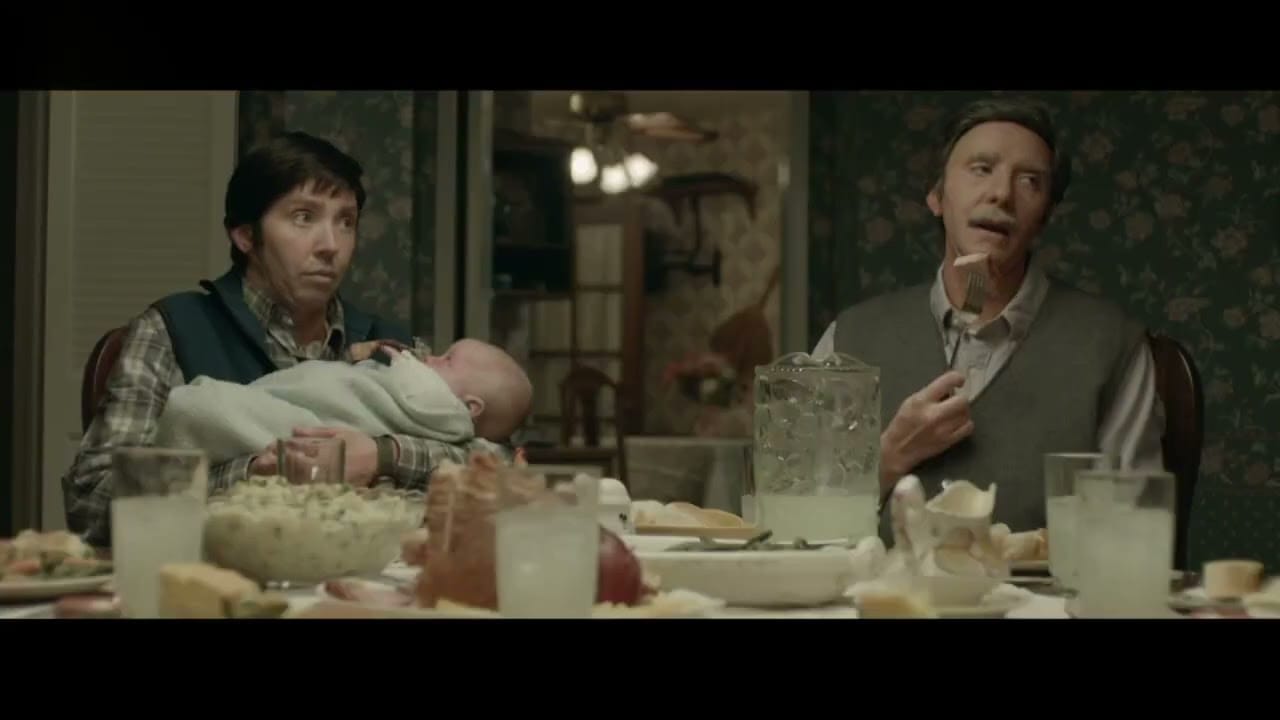
On our panel at SXSW, we were asked about things that grow out of the moment. And we did this one spot where we had Stephanie playing all the members of her family. And that was a big technical thing. And the comedy was awkward. You know, the funny, awkward tension of family. But we thought, what else could we do? So I just had her as the father character sing ‘Danny Boy,’ and we zeroed in on the reactions of everybody around the table.
Now obviously, ‘Danny Boy’ is public domain. So we were all like, let’s be smart about it and do something that can actually work. And they ran with it. That’s the kind of thing that not only can’t exist, but can’t be pre-sold. The key is staying open to the things that can’t be sold until we’re there, in the moment. That’s a big thing.

Brendan also said at that panel that one of the building blocks of the Progressive work, in addition to not taking yourselves too seriously, is that ‘we own the creative.’ How do you guys take that spirit and apply it to agencies and brands you've never worked with before?
Steve: It starts with earned trust. Brendan’s got a track record doing it. They believe in him. And, you know, trust goes so far. I think that’s trust in the production company, but first and foremost it’s trust in Brendan – that we’re going to deliver and get him to the promised land. And that’s a big reason why our company and our directors have had longstanding relationships. Clients believe in them. We’ve always said, if you can’t get the clients to come back, you won’t win out. You’ll never have a long career. So it’s about earned trust.
Brendan: I’d say this: you’re either going to like me or you’re not. Most times this works, but you’re hiring me to hire me. I’m specific. And what I’m going to do is be funny and treat the whole thing like my role in my family is.
We believe that you’ve got to take a swing, take our best shot. And if my job is to be surprising and funny and bring an energy to the table, then if I’m going to second guess any of that, you shouldn’t be hiring me. If we swing hard and hit well, great, but we can’t win all of them. And the moment we start acting out of fear, then we shouldn’t be in the goddamn business.
Steve: We’ve always had a saying, go for the gold. Don’t go for the silver.
Brendan, you also play music with a band; you play gigs, and you’ve released an album. How does that influence your process as a director?
Brendan: I love to write and perform for people. And being a director, I don’t view it as different from that. Very early in my career, I realized that being a director, especially a comedy director, is a performance. In fact, I’ve always looked at directing improvisational comedy as conducting. You’re pulling the strings. And however many characters you’ve got out there that you’re doing this dance with, you’re conducting something. You’ve got to get those actors truly in sync, but also everybody else who’s there working, too. And I also really enjoy it when you’ve got the grips laughing – as long as it doesn’t mess up a take. ‘Cause you know you’re doing right.
My take on my set days is this: this is my show. And my idea is that I’m doing this fun thing today, and all these people are helping me do it. And it’s the same the way I feel when I have a group of people in my backyard around the fire and we’re playing music.
The Avocados from Mexico jingle helps deliver the joke in this spot Brendan directed for LERMA.
How do you explain the endurance of your relationship? How is it that you guys have been working together for over 20 years?
Steve: I think for Brendan and I, our relationship is probably slightly different than a lot of other directors I’ve managed over the years. We’re good friends. It’s been harder to have physical presence with each other since I moved to Florida, but whenever we’re in the same place, we get together. Friendship can be tough when you’re managing careers, because when you get too close, maybe it’s not going so well. You know, it can be like a marriage. There’s pressure that comes with that because of the business relationship. But I’ve always said, if the director is happy, they’ll stay. If they’re unhappy, they’ll leave.
That said, I’ve never seen a director who’s moved a lot be successful. I think if you look at all the successful directors in the industry, they’ve been at one place, maybe two places. They’re not jumping every time someone says boo.
Have we delivered for Brendan? Not always. There’s always something we can be better at. But we have such an honest relationship, if something’s bothering him, he’ll tell me. We’ve always been open and honest with each other – and I’m open and honest with everybody we manage. But it’s just easier when there’s no bullshit. I’m never coming from a place of telling a director what they want to hear. Brendan and I just have honest, hard conversations when they need to be had. And we respect each other for that.
Brendan: Steve O. used a word that I was going to lean in to. My parents were married for 71 years. And at their 60th anniversary party, my aunt, who’s like my second mom, talked about watching them over the years. She said it all comes down to one word, and it’s respect. And if two people are going to have a fruitful relationship, you’ve got to be good at this one thing.
And if you don’t respect your partners, then you can’t have longevity. Because respecting that person means you have some skin in the game, a reason to not walk away, cause where am I going to go? To a company where I don't feel that about anybody? When you truly respect somebody, you can fix anything.
Steve O. and I have never had a contract. I know a lot of directors do. We have a handshake agreement to work together. And that is much more valuable to me than a contract or an agreement to say, ‘we’re going to do this for this amount of time.’ Because that inherently says, well, at the end of that amount of time, I’m going to consider my options.
And over these many years, there have been times when I’ve thought, ‘should I consider my options?’ But if you think about it, the answer is no; I’d prefer to talk to my partners about anything that’s bothering me and build off that. And that’s what we’ve done.