Capturing a Fashion-Forward Spark with CANADA's Talia Collis
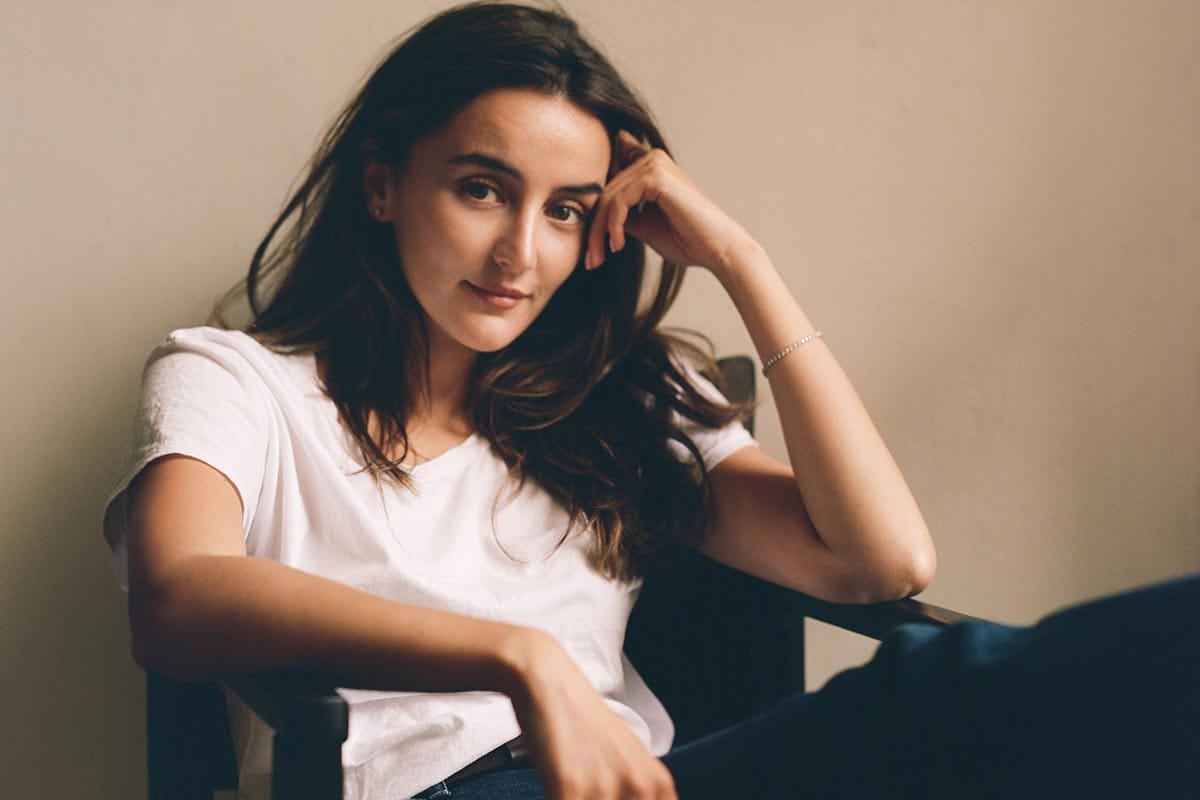
Vivid. Calculated. Beautiful. These are the first words that come to mind viewing Talia Collis' work. Recently signed to CANADA for US representation, she's a British film director with the taste of a photographer, the discipline of a producer and a penchant for everything fashionable.
Talia's career started immediately after graduating from Parsons in New York, taken under the wing of producer Helena Martel Seward and working at Vogue as an Associate Producer. Fast-forward a few years, and she's created one of the company's most successful digital series, "Diary of a Model," spanning 40+ episodes in seven years and amassing 72 million views on YouTube.
Since then, her portfolio has consisted of meticulously choreographed, sonically sound and humorously fun spots for top apparel and lifestyle brands including GAP, Therabody, Hermès, Calvin Klein and many more.
The Howler reached out to Talia for a better idea of fashion-focused craft, and how her passion for the runway has influenced her style as a director. Here's what she had to say.
You've been a producer, a photographer and of course a director. How does your experience producing and in still photography influence or inform your style and creative decision making as a film director?
Talia: Working as a producer at American Vogue and across freelance jobs under Helena Martel Seward made me a much smarter director. It gave me a real understanding of what it takes to bring an idea to life, not only creatively, but practically. I learned how budgets, time and resources work, and how to make creative decisions within those realities.
It also taught me when to push for something and when to adapt. Production is rarely about saying no for the sake of it. More often, it is about protecting the budget, the schedule and the overall possibility of making the work happen. Having been on that side, I understand that limitations are not always obstacles. Sometimes they force you to be more precise, more inventive and more intentional.
When I was producing, I worked with directors who sometimes felt production was restricting them, when actually we were trying to protect the idea within the resources available. That really shaped how I direct now. I try to be ambitious, but also realistic. I care so much about making the strongest possible work, but I also care about making the process feel intelligent, collaborative and achievable.
Still photography has influenced my eye in terms of composition, gesture, light and the emotional power of a single frame. But producing is probably what most shaped the way I make decisions as a director. It taught me that creativity is not about having endless options. It is about knowing how to make the right choices with what you have.
With clients like GAP, Hermès, Thom Browne, Glossier and of course, Vogue, one might say you’re drawn to fashion. Tell me where that all started. Was it always something you leaned towards, or did something spark along the way?
Talia: It started with Vogue Paris, as it was called then. I remember picking up the magazine and being completely mesmerized by the images. These beautiful women, these extraordinary worlds, the clothes, the hair, the makeup, the locations. It felt so far away from my own life at the time. My world was quite ordinary, and of course there is nothing wrong with ordinary, but fashion gave me access to something heightened. It felt like fantasy, performance, character and image making all at once.
At the time, I did not fully understand what I was looking at. I did not know how much set design, styling, hair, makeup, lighting and composition went into those images. I just knew they made me feel something. They made me want to create worlds of my own.
So I asked my dad for a camera, and we drove to John Lewis, where he bought me a Nikon D500. I started photographing friends, or girls at school who I thought were beautiful. I would bring the clothes, sometimes from my mum’s wardrobe, style the looks, and find locations around London near where I lived. I loved it.
I think my love of fashion also came from musical theatre. Singing and acting were my first loves, and I loved that feeling of transforming on stage. But when I realized I preferred being behind the camera, everything clicked. I understood how I wanted someone to feel in front of the camera, because I had once wanted to feel that way myself.
That has stayed with me as a director. Fashion gave me the fantasy, theatre gave me the performance, and directing became the place where those two worlds could meet.
Speaking of Vogue, you created their hit series, "Diary of a Model," directing new episodes over a span of 5+ years. How did that relationship start, and what did you learn as a filmmaker from the experience?
Talia: The relationship started from me noticing a gap. At the time, Vogue’s video channel was really developing with series like 73 Questions and Beauty Secrets, but I could not understand why there was not a format dedicated to the models who were filling the pages of the magazine, walking the runways and shaping so much of the visual culture around fashion.
I felt there was a real curiosity around who these women were beyond the image. What their day to day looked like, what their personalities were like, and what it actually felt like to be backstage in the madness of a major fashion show, surrounded by famous designers, makeup artists, hairstylists, stylists and the whole machine that brings those moments to life. With the access I had at Vogue, I could see how many different places the idea could go.
We were lucky that Adesuwa Aighewi was our pilot episode because she brought so much personality and openness to it. She took the ideas and made them feel alive, which helped me show Sally Singer and my boss at the time, Kimberly Arms, why the series had legs.
What I learned from Diary of a Model is that even when you have a clear format, every person brings something completely different. That is what made the series work. Each model had her own perspective, rhythm and energy, so each episode had to adapt to her. As a filmmaker, it taught me to listen, to move quickly, and to shape the creative around the person in front of me. The goal was never to force talent into the format, but to use the format to help them shine.
The tone of your work is pretty varied, sometimes being focused on intricate choreography and dance alongside subtle beats, but other times you let mostly static shots speak entirely for themselves. How do you decide the kind of approach that will work best for your client, or for the brief? Is there a certain methodology behind it all, or do you just go with what feels right?
Talia: It really begins with listening to the client and understanding what the brief is asking for beneath the surface. Sometimes a brand needs energy and movement. Sometimes the most powerful thing is restraint, allowing a single frame or gesture to hold the whole idea.
I do not think there is one fixed approach that works for every project. The methodology is more about finding the right visual language for the brand, the talent and the product. If the client is open to a bigger creative swing, I will always try to push the idea further than they imagined, while still making sure it answers the brief and serves the product clearly.
What is consistent in my work is the balance I am always looking for. I want the films to feel elevated and beautifully considered, but also alive. Even when the frame is still, there should be tension, humor, emotion or some kind of spark inside it. I love work that has a sense of joy and a little wink, but never at the expense of taste.
So the approach changes depending on the client, but the instinct is the same: to build a world around the product that feels specific, stylish and emotionally engaging. Whether that is through choreography, subtle performance beats or a perfectly composed static shot, the goal is always to make the brand feel more desirable and more memorable.
On the topic of music, what's typically on your playlist? Does your work reflect your tastes, or do your preferences reach far broader than that?
Talia: I have an “IDEAS” playlist on Spotify where I save songs that spark something in me, usually tracks I can immediately imagine directing a piece to. Sometimes it is the rhythm, sometimes it is the feeling, sometimes it is just a strange little world the song opens up.
My taste is quite broad, but it has definitely become even broader since I met my fiancé. He is the real music guru in the house, and he has pushed the way I think about music in my work. I will tell him about an idea I have for a client, and we will build a playlist together, talking through what each song makes us feel and what kind of visual world it suggests.
It has become a really important part of my process. Music is not just something I put on at the end. It often helps me find the tone, the rhythm and the emotional temperature of a piece. In a way, it becomes a creative brainstorm with the person who inspires me most.
You've been with CANADA for half a year now. How has that relationship been in terms of presenting new opportunities for you? Where would you like to see it go in the future?
Talia: Being with CANADA has been incredibly exciting. I feel very lucky to be working with a company that is not only creatively brilliant, but also ambitious, hungry and genuinely collaborative. From Charlotte [Woodhead], to Ellie [Barlett], to Diana [Milesi], to Bridgitte [Pugh], to Ingeborg [Stavdal], I have felt surrounded by amazing women who really want to build something with me and make work that leaves a mark. I do not take that for granted.
I am quite an ambitious person, and when I say I want to reach for the stars, I really mean it. I want to keep growing, to work with the best people, and to make films that feel joyful, visually exciting and culturally relevant.
Looking ahead, I would love for my relationship with CANADA to keep opening doors into bigger, more imaginative work. Dream projects would be things like Apple films with a strong music or choreography element, or music videos with special artists where there is room to really push the creative.
Speaking of dream projects, is there a particular client you’d love to shoot for, or a general vision or story you’re itching to bring to life?
Talia: My friends and family will read this question and already know the answer. I am manifesting a Chanel perfume film in my career. Those films had a huge impact on me when I was younger, and helped me realize that directing could be a place where fashion, beauty, cinema, music and emotion all meet.
A Chanel perfume film feels like the dream because it is never just about a product. It is about a woman, a feeling, a world you want to step into.
Beyond that, there are so many stories I want to tell, but they usually come from the people I meet along the way. I am most inspired by character, by someone’s energy, contradictions, humor or mystery. Often the dream project starts with a person, and the world builds from there.