Staying on the Cutting Edge with Zoic's Aladino Debert
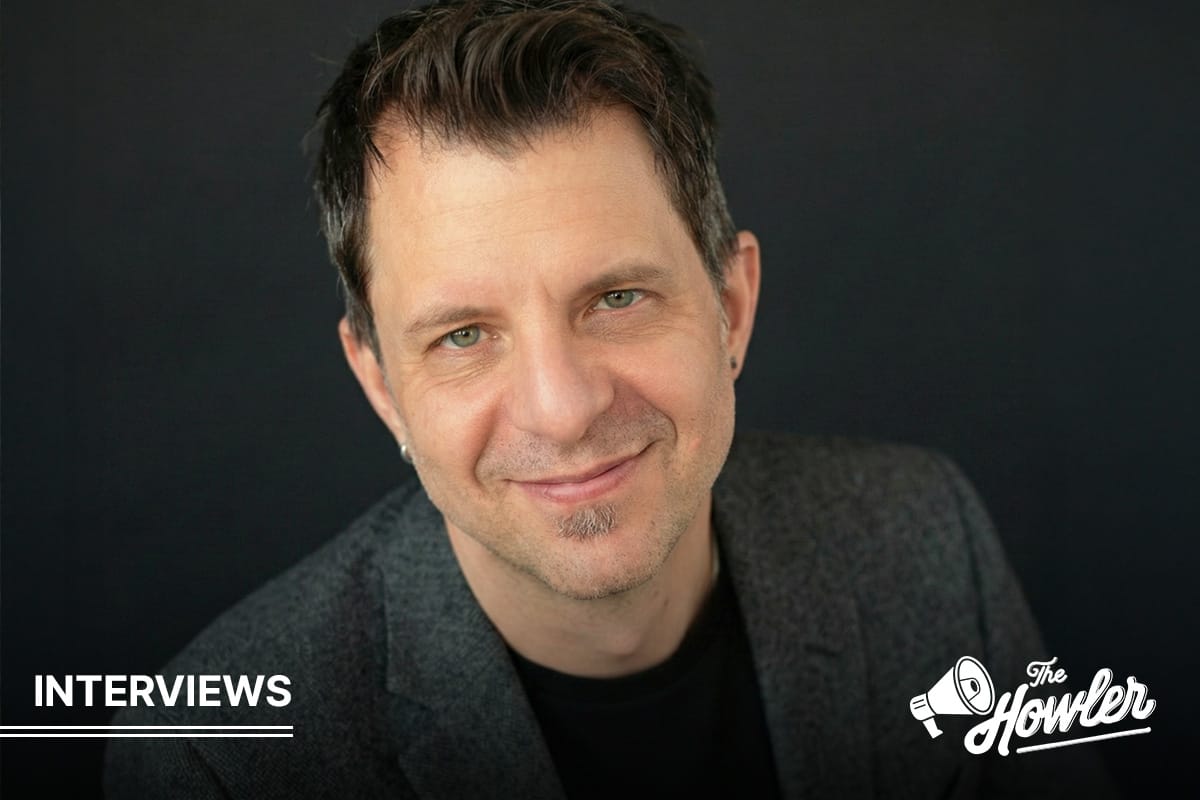
If you've been breathing for the past 25 years, you've probably seen Aladino Debert's digital footprint in some form or another. As Zoic Studios' Executive Creative Director & Visual Effects Supervisor, he oversees his team's creative output; simultaneously pitching, designing and directing short and long form projects spanning film, TV and advertising.
Originally from Buenos Aires, where he studied architecture, Aladino began his career in digital effects near the turn of the century, cutting his teeth at Metrolight Studios and VisionArt Design as a CG Supervisor on films such as "Dr. Doolittle 1 & 2" and "Spy Kids." After an early stint at Digital Domain, where he worked on films including "The Time Machine" and "Star Trek: Nemesis," he went on to serve as Head of 3D and Director at Radium/ReelFX. He later returned to Digital Domain, where he spent more than 13 years as a Director and VFX Supervisor, helping spearhead the studio’s expansion into episodic television and earning numerous awards and accolades along the way. He joined Zoic in early 2024.
Aladino’s clients have included major brands such as Nike, Audi, BMW, Microsoft, Pepsi, Meta and many, many more. With work spanning advertising campaigns, film, TV, and video game cinematics, he's cemented himself as a force to be reckoned with in an ever-changing industry.
The Howler reached out to Aladino, whose personal work can be found here, to gain some insight as to how he's managed to not only keep up with but even help guide the course of the industry. Here's what he had to say.
Working with technology is volatile to say the least. How has your process evolved over the years?
Aladino: Funny enough, I never thought of myself as working with technology as an end in itself. I’ve always looked at what I do as a creative endeavor that happens to use technology as a means to achieve what we want creatively.
Obviously, since I came into the industry a bit too late to work with purely practical effects (unfortunately!), technology has been indispensable to what I do. But I only see it as a means to an end. A new set of tools comes along, and that simply allows me to expand what we can do visually. I often joke that render times have stayed pretty steady for 25 years, but what we can render on those same hours is orders of magnitude more sophisticated.
But of course, AI is upending that assessment.
So how do you feel about AI being used increasingly in animation and post-production? Do you embrace this direction, or are you more critical of it?
Aladino: This is, of course, a touchy subject. AI is revolutionary, and whether one is critical of its use or embraces it, the truth is that it’s an inevitable force changing everything. With any technical revolution, there are those who benefit and those who don’t, and personally I’m trying to be as clear-eyed as possible about both its pitfalls and its potential.
I happen to think story, or your creative goal, is the most important thing when it comes to what we do, especially in animation, but really in visual effects in general. And it can’t be denied that AI is allowing artists to tell stories that would otherwise be cost-prohibitive. So, in that regard it has a democratizing effect.
But of course, one can’t deny the effect AI is having not just on our industry, but on art, science, and society in general. The impact is everywhere, from people being put out of work as entire areas are replaced by AI tools – sometimes before those tools even work as intended – to our social media feeds being inundated with so-called “AI slop.” It’s becoming harder and harder to tell what’s real, even for someone trained to look at images, and AI implementation and advances are moving so quickly that it’s very difficult for some people to adapt.
Layered on top of all this are the ethical concerns about how these models are being trained, and I think that’s something we all need to figure out moving forward. But the truth is, AI is unstoppable, so it’s up to us to find creative, legal, and responsible ways to use it, because it can be very useful in many cases. That’s why at Zoic we’re finding ways to incorporate AI into our pipeline in a considered and data-safe way.
I’m no longer impressed by incredible images or videos of cats playing drums, because it’s become so easy to do, which is a shame. In other words, you can get to mediocre faster than ever before. What does impress me is seeing people using the technology to improve what they do. For me personally, it allows me to bypass my own limitations and get to what I want to do faster, or to more clearly convey to people what I have in mind.
Your work spans short and long form projects across features, TV and advertising. Do you need to take on a different mindset and approach based on the media format you’re working on? Or does the creative process flow naturally regardless of the project?
Aladino: Yes and no. After so many years in the industry there’s a certain subconscious switch that happens where I adjust my creative approach depending on the project at hand. I like to compare it to a sandbox, where one changes the kinds of games you play depending on its size. So, for instance, if I’m working on a commercial, where perhaps you have 20 shots to do and, say, a few weeks of production time, I kind of automatically tailor my goal to that particular set of restrictions. Whereas if I’m working on a TV show, where we’ll be doing hundreds of shots and working over many months or more, I adjust my goalposts to that particular reality.
They are both interesting to me, and that’s why I've ended up doing both over so many years of my career. There’s something appealing about having limits that excites me on a short-term project, because it forces you to come up with the best answer to a creative question quickly. On the other hand, I still remember finishing my first large-scale TV show (the STARZ series “Black Sails”) and telling my boss: “I need more of THAT!” The idea of having many months to really develop tools and collaborate with a big team feeds my tendency to work on something until I absolutely have nothing else I’d do on it.
So, I don’t think I change my way of working consciously, but because of years of experience I adjust my approach in order to give myself, my team and the project the best chance of success. That becomes doubly important when I direct advertising or game cinematics, where I’m balancing my own creative vision with the client’s needs and the production realities at hand.

How has working with ad agencies and brands evolved over the past few years, particularly in light of the emphasis on infusing AI into the production and post process? Are client expectations different? Do VFX artists need to develop new skills? What is your overall view on this trend?
Aladino: In many ways our relationship with agencies hasn’t changed, because their end goals are still the same: to advertise and sell. However, and this isn’t new, they want to do it for the least amount of money possible, and the AI craze has turbocharged that desire, perhaps due in part to a misunderstanding of the technology.
In my opinion, the issue is that their basic instincts haven’t changed that much to adapt to working with AI. Until recently (and I have to caveat anything I say because it’s changing so fast), AI hasn’t been very art-directable, and agency creatives and art directors have that title for a reason, so there’s a certain amount of education required to use it successfully. Our job in many ways is to be the conduits for that education, but the technology is advancing so quickly that we’re getting educated ourselves as we try to inform our clients. In short, a lot of clients think AI is a magic bullet that makes everything easy and cheap, and although it certainly makes some things easier, that comes with quite a lot of caveats.
What’s really changed, at least for me personally as a director, is how we pitch work. Whereas we always created decks showing what our ideas were for a particular project, AI tools have meant that I can now communicate those ideas much better and in some cases visualize exactly what I’m proposing for a particular shot or sequence, while in the past it would’ve required a certain amount of imagination and trust on the part of our clients.
And that brings me to your question regarding whether artists need to develop new skills, and the answer is absolutely. Adapt or die. AI is a force to be reckoned with, akin to a locomotive coming towards you at full speed (you either jump on or get run over.) It’s the brutal reality of an industry that straddles the line between art and technology, and the latter is changing in ways we haven’t seen since the advent of CGI. But what is important, I believe, is to maintain your “North Star.” AI, as disrupting as it is, still lacks a soul.
So yes, find ways to incorporate new tools in how you create your work. But don’t lose sight of the fact that while AI can generate imagery, it can't generate meaning. That still takes a human being, and that’s worth protecting.
How does working at Zoic differ from your experiences at other studios?
Aladino: Zoic is one of the largest, if not the largest, independently owned visual effects studios still around, and that makes a world of difference. The same few people that started the studio 23-plus years ago are still involved with the workings of it daily, and that has meant a fluidity, nimbleness and accessibility that I found, after working at a big studio like Digital Domain for almost 15 years, refreshing to say the least. At DD I never actually met the owners, since they were in Asia, while here not only have I known them and been friends with them for over 20 years, but can literally pick up the phone and talk to the decision makers instantly.
Arriving at any studio at a high level and being the “new guy” can be challenging, because we all bring different ways of thinking or doing things. But Loni and Chris [Zoic founders Loni Peristere and Chris Jones] brought me in precisely because I didn't come up through the Zoic way of doing things, so that made for an incredibly smooth transition. I was looking at ways to grow as an artist, and I was welcomed in a way that surprised me.
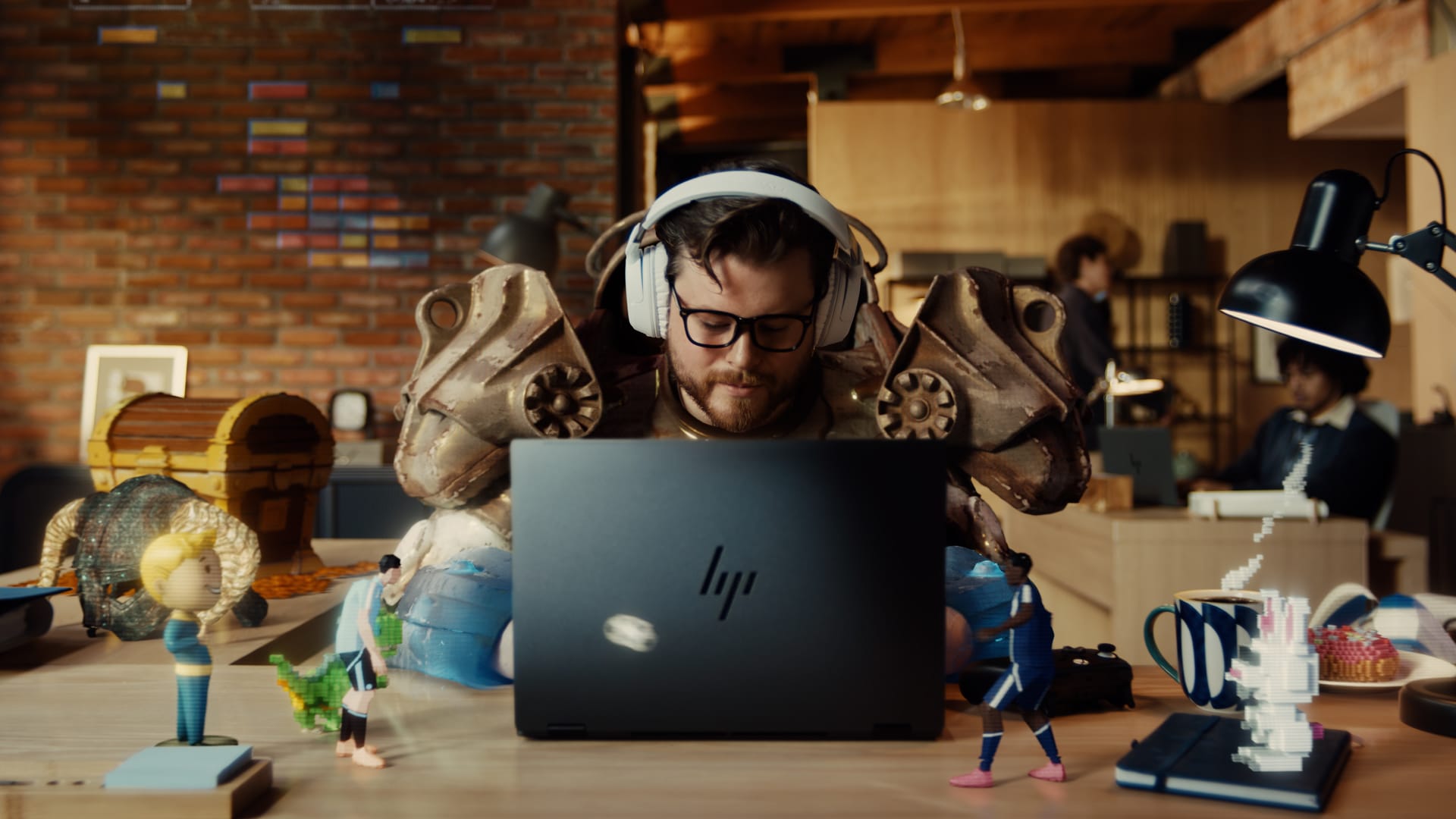
What I think I do best is looking at a project from 30,000 feet. I’m not the most technical person in the room, but I've done everything from rotoscoping to rigging, animation and compositing, and the owners of the studio and I share the same goals: to do the coolest work we possibly can, regardless of the technique being used. That’s exactly why I jumped at the opportunity to join them when the chance came up. Thanks to a deep bench of talent, I have the freedom to do what I do best here, whether it be directing commercials for HP or supervising large teams doing long form visual effects for shows like “Alien: Earth” or “House of the Dragon.” That freedom, together with the nimbleness and direct access to decision-makers that comes with being independently owned, is what sets us apart, and why we are our own fiercest critics.

Your personal website shows off a range of work as well as a curated archive of older projects you’re particularly fond of. Out of all of your work, does any one project stand out above the rest as your favorite? What makes it so significant to you?
Aladino: Definitely, I admit we all have our favorite children! So even though I’m never fully satisfied with the results of the work I do (I call it the “Artist’s Curse”) I have two I can honestly say I loved how they came out.
One is the aforementioned “Black Sails,” a prequel to the classic Robert Louis Stevenson novel “Treasure Island,” that to this day holds a warm spot in my heart because it was the first big TV show I supervised. Its third season (I started on its second) was incredibly challenging and satisfying for me because it was, as I mentioned before, the first time my “sand box” got bigger. So that show opened my eyes to a whole different side of what we do that I hadn’t, until that time, been able to explore.
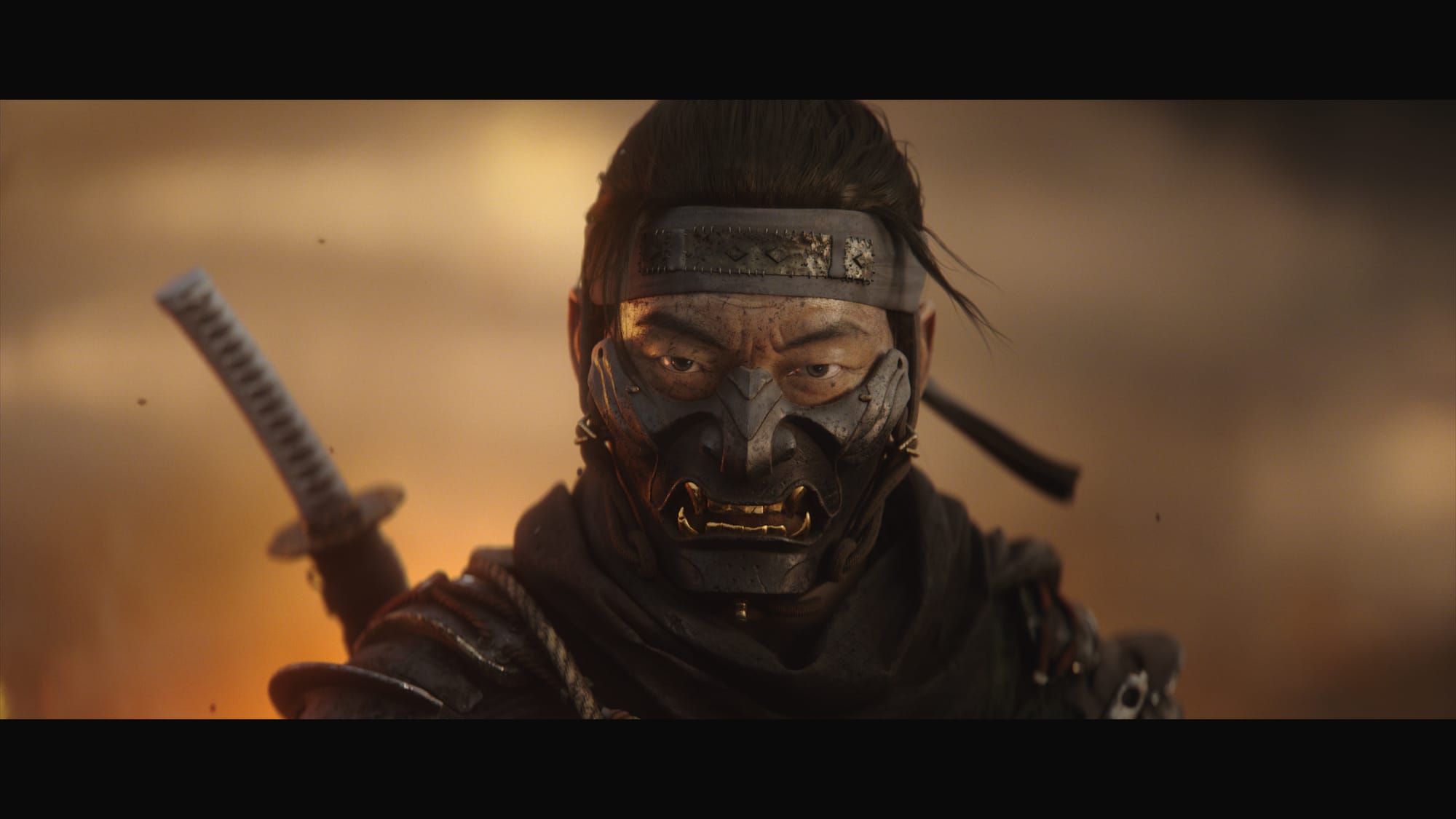
The second is the cinematic for “Ghost of Tsushima,” which is a piece where I was able to, I admit without guilt, steal from Akira Kurosawa’s cinematic style in a way that was totally apropos to the job at hand. From our initial concept art, which blended the game’s style with more cinematic sources, to directing the motion capture, the experience was a very fulfilling one, where I was able to hone in on a vision and polish, and polish, until we ran out of time.
Throughout my career I’ve been searching for ways to express an artistic restlessness that’s often hard to satisfy. Be it advertising, episodic TV or, hopefully, directing long form shows, I’m constantly looking for projects that bring back that rush. That’s why years ago I created a spec spot for Audi that was responsible for propelling my directing career forward, and have more recently written a couple of feature film scripts I’m hoping to one day produce. To be honest, even though I’ve mentioned two projects I really liked, I think my favorite project hasn’t happened yet.