POV: "Our Industry Has Mistaken Branding for Belief"
Creative companies need to better explain what it means to be ‘human made,’ and how maddeningly complex a proposition that is.
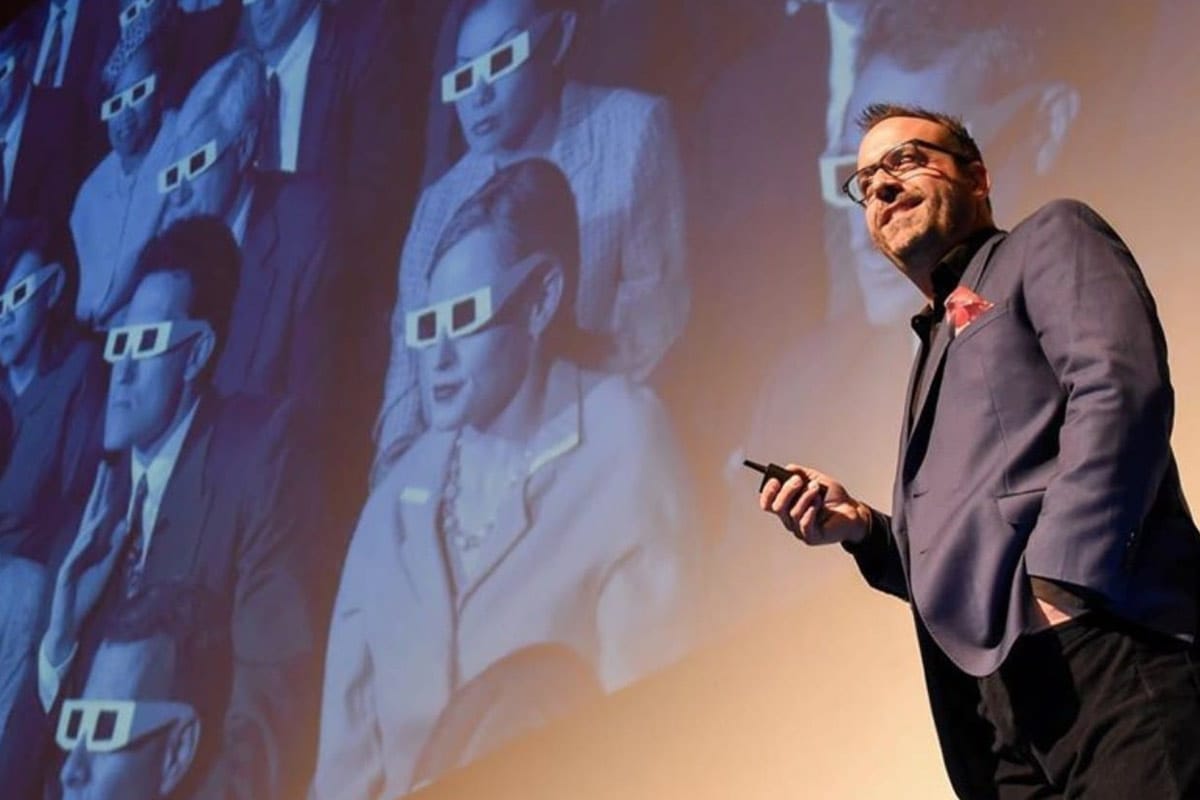
By Joel Pilger
Before a single word was spoken on stage at Making Midwest, the conference for motion designers and creatives held in late June, people had already decided what the conversation was going to be.
The panel was meant to explore AI, craft and the future of creative work. Instead, the promotional post announcing it ignited a debate online. Some assumed it would be an attack on AI. Others assumed it would be a defense of it. Before anyone had taken a seat, the discussion had already been sorted into opposing camps.
Watching it unfold, I realized our industry has started mistaking branding for belief.
Creative companies increasingly define themselves through labels like “Human Made,” “No AI,” “AI First” and “AI Native.” Those positions may communicate a point of view, but they don’t explain how a studio actually operates. They reduce a complex operating philosophy into a marketing position, even though running a creative business has never been that simple. Every day, founders balance ambition against budgets, quality against deadlines, new technology against proven workflows and client expectations against creative standards. None of those decisions can honestly be reduced to a slogan.
Imagine a client asks for concept art on half the usual budget and wants to know whether AI is on the table. The answer isn’t yes or no. It's a series of questions. Does using AI change what the client is paying for, or simply how quickly they receive it? Does it free your artists to spend more time on the work that actually creates value? Does it compromise something your studio believes should remain human? A studio built around a slogan answers immediately. A studio built around judgment asks better questions first.
My goal wasn’t to determine whether AI is good or bad, but to hear from people making these decisions every day.
That’s why I wanted this panel to happen. My goal wasn’t to determine whether AI is good or bad, but to hear from people making these decisions every day. Studio leaders don’t have the luxury of arguing in absolutes. They have to hire artists, advise clients, build teams and deliver exceptional work while the technology underneath them continues to evolve. Those aren’t ideological decisions. They're leadership decisions.
Ryan Summers, one of the original panelists who was ultimately unable to attend, sent a message that captured the spirit of the day better than any panel could. He wrote that the real value of gatherings like Making Midwest isn’t found on stage but in the conversations that happen between sessions, where ideas are challenged, perspectives shift and people learn from one another. “The secret isn't in AI,” he wrote. “The secret is in this room... we only all get to discover it when we all talk to each other, out in the open, together.”
That idea stayed with me because it redirected the conversation away from technology and toward judgment. AI will continue to evolve, along with the tools, workflows and business models surrounding it. As execution becomes cheaper, judgment becomes more valuable.
Judgment isn’t something a studio claims. It’s something it practices. The teams navigating this moment well don't start with ideology; they start with context. They treat each project as its own question instead of forcing every client through the same philosophy. They invite artists into the conversation rather than limiting them to execution. They recognize that consistency of values doesn't require consistency of tactics. That’s not indecision. It’s leadership.
I’ve spent much of my career helping creative founders position their businesses, and one lesson has remained remarkably consistent: clients don't hire studios because of the tools they use. They hire them because they trust how they think. They trust that when the path forward isn't obvious, the people across the table will make smart decisions on their behalf.
Branding isn’t belief. It's the expression of belief. At its best, positioning communicates how a company approaches uncertainty. It gives clients confidence in the quality of your judgment long before the work begins. When positioning becomes a declaration of ideology instead, we stop communicating how we solve problems and start signaling which tribe we belong to. That’s a fragile strategy because every technology debate has a shelf life. AI won’t be the last shift our industry navigates, and it probably won’t be the most significant.
The panel didn’t end with consensus, and that wasn’t the objective. Nobody walked away with a universal AI policy. We walked away with something more valuable: a better understanding of how thoughtful leaders wrestle with difficult decisions, challenge one another's assumptions and adapt without abandoning their principles.
A slogan might tell me what your studio believes about AI today. It won’t tell me how you’ll respond to the next technological shift, the next client challenge or the next difficult decision. Clients aren’t buying certainty. They’re buying judgment.
That’s the kind of positioning that doesn’t expire.
Joel Pilger spent twenty years leading Impossible Pictures before exiting to devote his career to helping founders of creative companies navigate the business of creativity. As the founder of Creative Foundership, which he describes as the emerging discipline of developing the judgment required to pilot a creative business under changing conditions, he’s advised has advised hundreds of studios – including Giant Ant, Sarofsky, Laundry, STATE Design, Antfood, and VERSUS – on the decisions that shape successful companies.